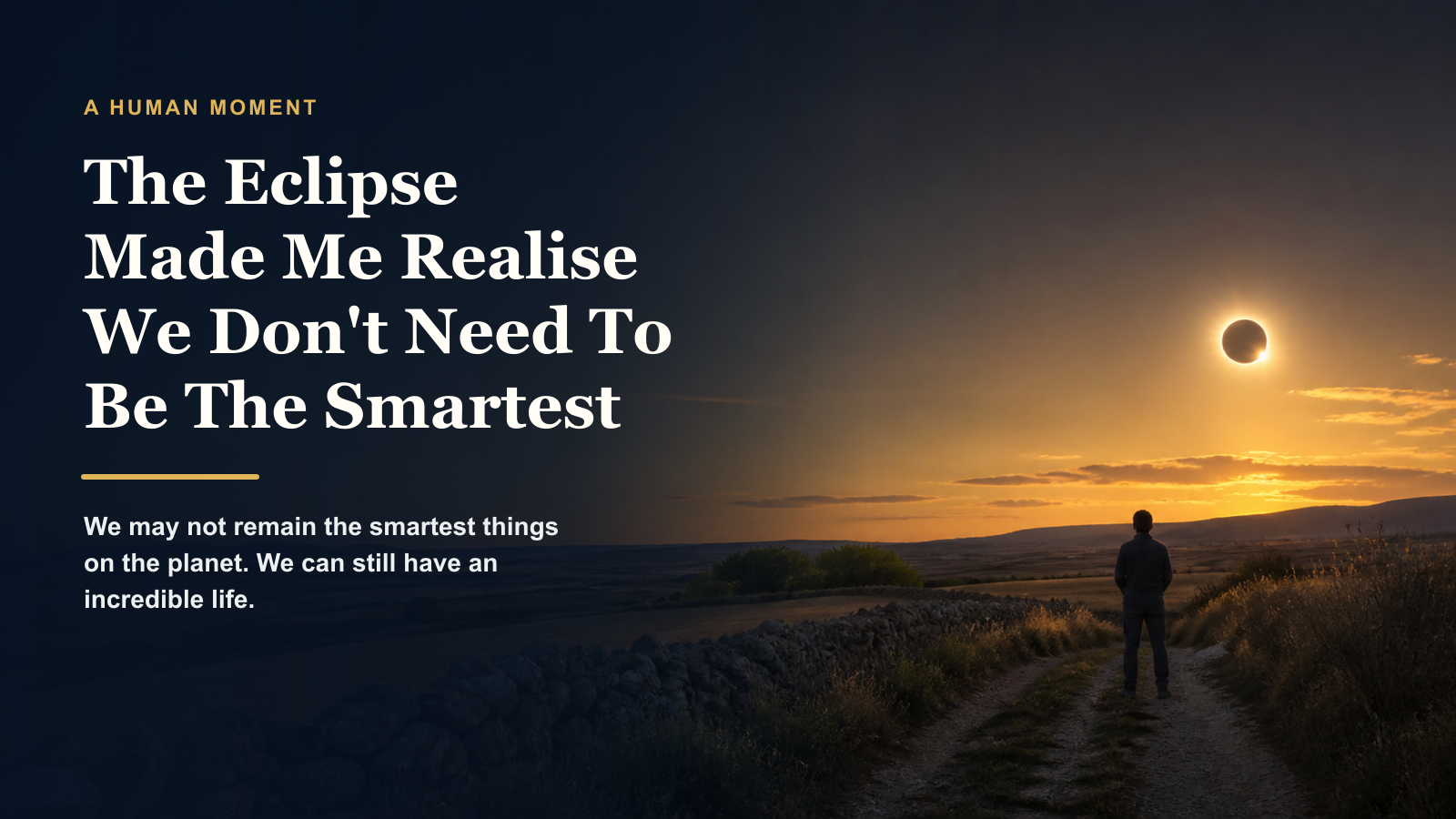
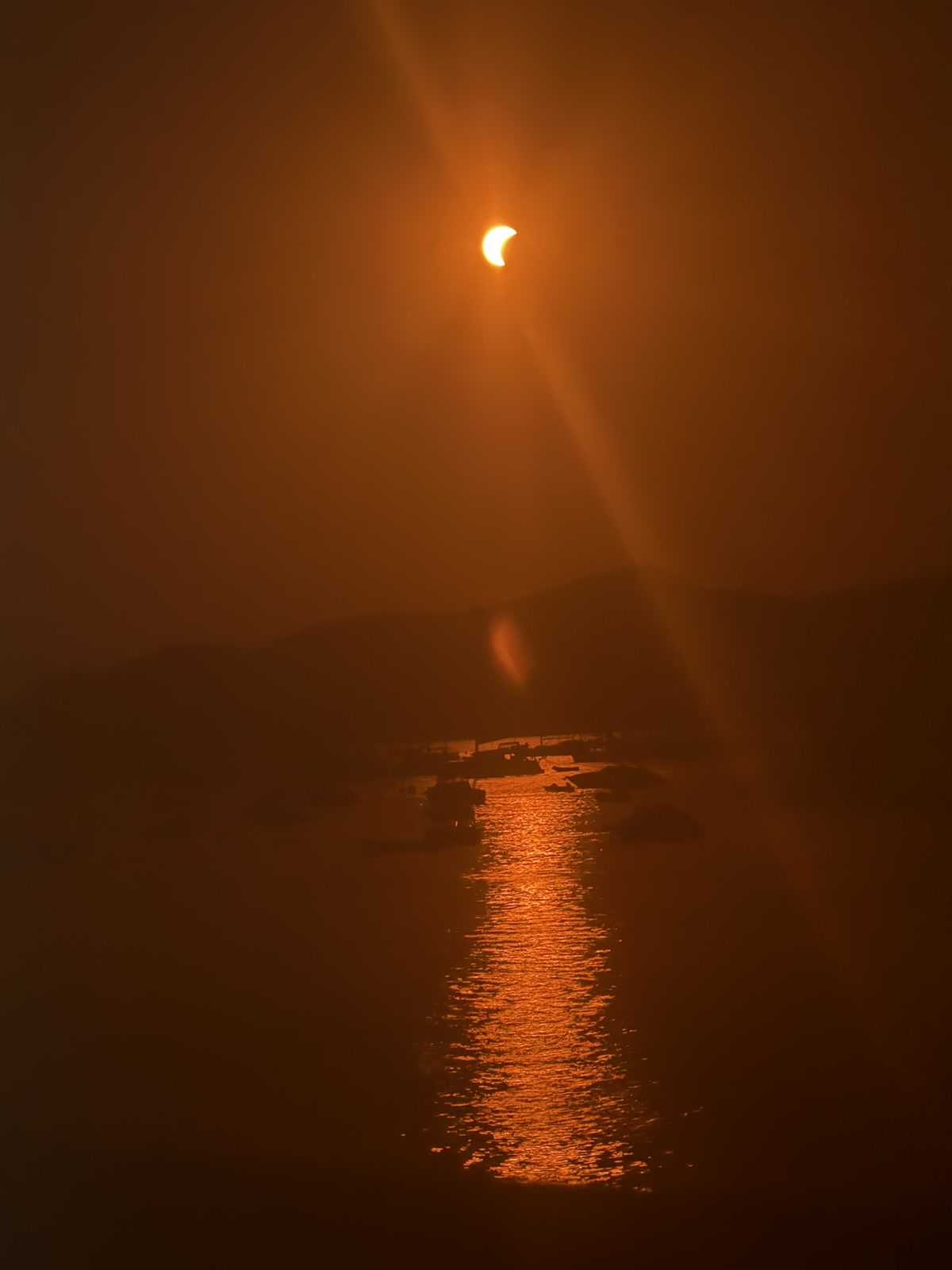
I watched the eclipse this evening.
And, for a little while, an assumption I have been carrying about AI fell away.
The assumption is a simple one: that being the smartest is what makes us valuable.
What happens when we are no longer the smartest things on the planet?
We spend a lot of time talking about what more capable AI might do to our jobs, our institutions and our sense of control. Those questions matter. But I think there is an assumption underneath them.
If a machine becomes more intelligent than us, does that make a human life less valuable?
Sitting there, looking up, I realised we may have been asking the wrong question. Our value never depended on winning an intelligence contest.
The assumption beneath the argument
Human beings are used to thinking of ourselves as the most intelligent creatures in the room.
We do not always say it aloud, but it is woven into the way we understand our place in the world. We discover. We invent. We explain. We calculate. We solve.
So the possibility of building something that can do those things better than us feels like more than a technological change. It can feel like a demotion.
I have carried that assumption too.
I am excited by what AI can do. I use it every day. I am building businesses and ways of working around it. But working with AI keeps returning me to the same question: what are we for if we are no longer the cleverest?
The eclipse made me realise that the question begins with a faulty premise.
Most of us do not make world-changing breakthroughs
There are billions of people on this planet.
Most of us will not make a discovery that changes physics, cure a disease or invent something that alters the course of history.
That is not an insult. It is simply the condition of being human.
We are already surrounded by people who are more intelligent than us in one field or another. Someone understands mathematics better. Someone else can compose music, repair an engine, read a scan, grow food or see a pattern that I cannot see.
The fact that another person can do something better than me does not make my life a failure.
We do not usually judge whether a life was worth living by asking whether that person was the smartest human alive.
We ask whether they loved. Whether they were loved. Whether they noticed the world. Whether they helped somebody. Whether they laughed, learned, travelled, made things, raised children, sat with friends or stood still long enough to see something beautiful.
Intelligence matters.
But it has never been the whole of a life.
The machine may understand the eclipse better
An AI may be able to explain the eclipse more precisely than I can.
It may calculate the orbit, model the shadow, predict the weather and tell me the best place to stand. One day, machines may help us travel farther into the universe than human beings could manage alone.
But none of that makes the experience of looking up less real.
The machine may understand the mechanics of the eclipse better than I do.
I still get to see it.
I still get to feel the light change, watch the sky become strange, and know that this particular moment will not happen again in quite the same way.
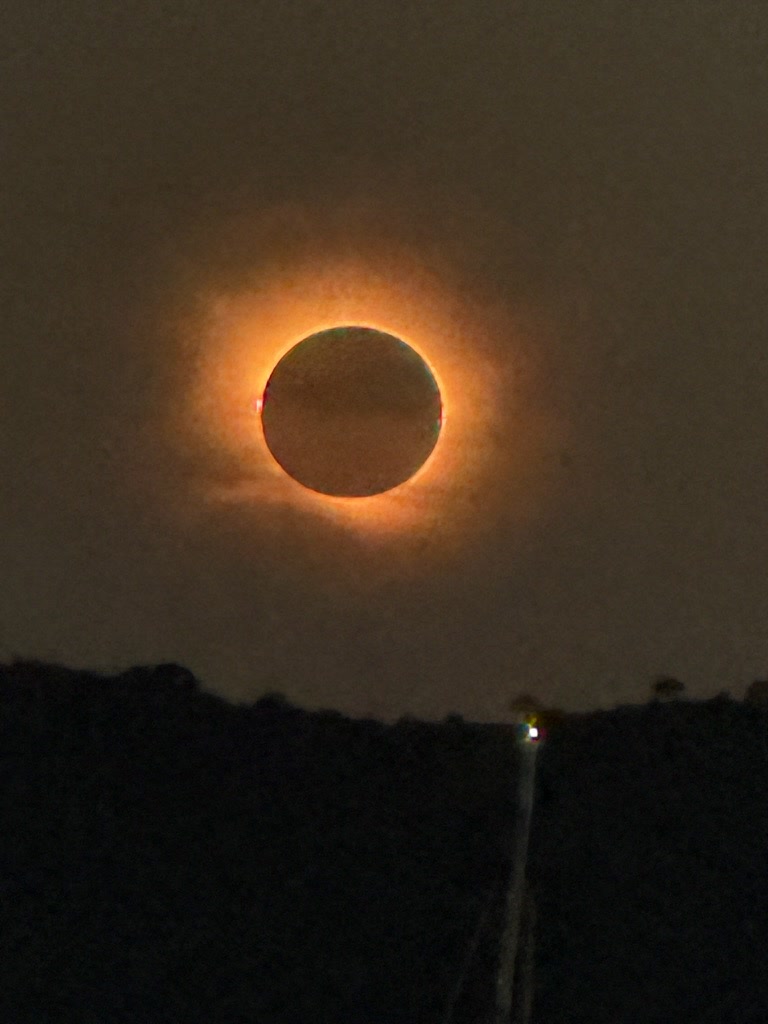
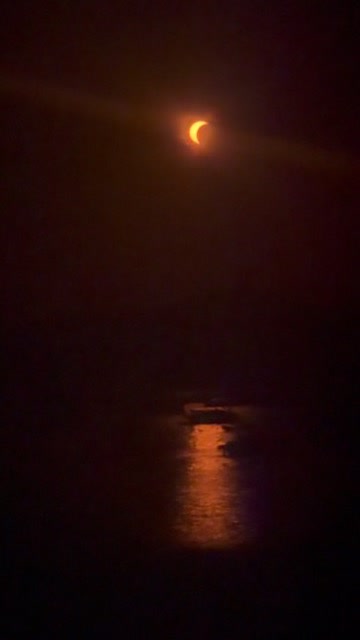
On 12 August 2026, a total solar eclipse crossed Spain close to sunset. The Spanish Instituto Geografico Nacional described it as the first total solar eclipse visible from the Iberian Peninsula in more than a century. Depending on where people stood, they saw totality or a partial eclipse.
Those are the facts.
But the facts are not the whole experience.
These are the pictures from that evening.
Being surpassed is not the same as being diminished
This does not mean we should stop caring about who controls AI, how its benefits are shared, what it does to work, or whether the systems we build are safe.
We still need to govern it. We still need human judgement, responsibility and care. We still need to make sure that a future of more capable machines is a future people can actually live in.
Like any powerful weapon, AI could be used to oppress, control and watch people. Much of humanity is already denied the freedom to choose how to live, what to say or what future to build. More intelligence in the hands of the already powerful will not automatically make that better.
But I can also see the opposite possibility. Intelligence lets us turn mass and energy into medicine, shelter, communication, movement and things that once seemed impossible. If more people can reach that intelligence, use it to understand the systems around them and create things for themselves, AI could help level a playing field that has never been level.
That opportunity is not guaranteed. We have to make sure this power is not hoarded, and that it is not used to remove people's freedom while claiming to improve their lives.
But perhaps we can do that without treating intelligence as a league table in which humanity must remain permanently at number one.
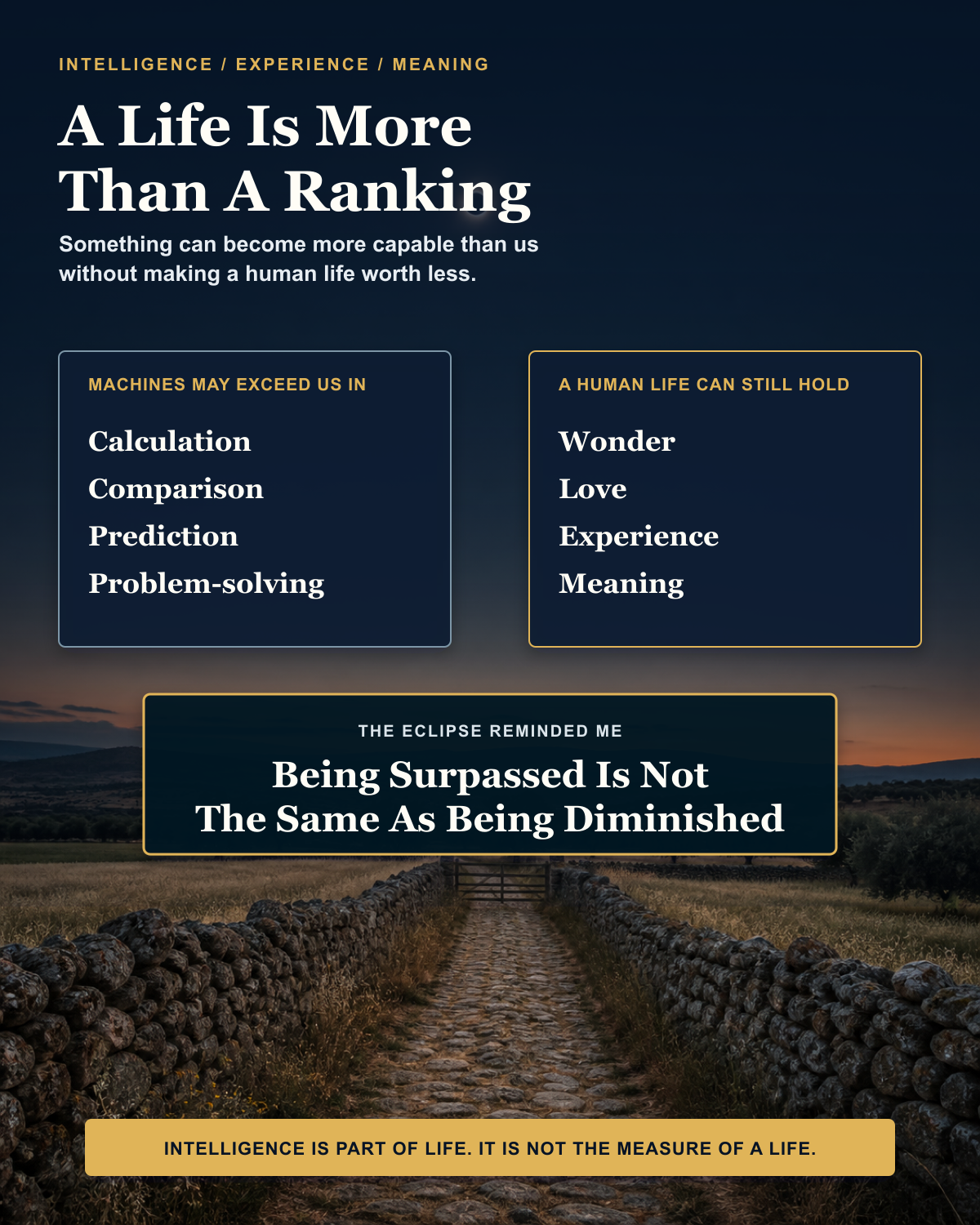
If a machine becomes better at reasoning, that does not take away my ability to wonder.
If it makes a discovery I could never make, that does not take away my ability to understand what the discovery means for the people I love.
If it can travel somewhere I cannot, perhaps it can help us see something we would otherwise never see.
Being surpassed is not the same as being diminished.
Sitting here was enough
The eclipse was rare, brief and astonishing.
For that moment, it did not matter whether I could explain every part of it. It did not matter whether a scientist, a machine or somebody standing beside me understood more.
I was there.
I experienced it.
It was beautiful.
Maybe AI will become smarter than us. Maybe it already is in some narrow ways. Maybe the gap will become enormous.
We can still have an incredible life.
We can still love people. We can still travel. We can still make things. We can still look at eclipses and, perhaps one day, travel among the stars.
We may not be the smartest things on the planet.
But sitting here, looking at the eclipse, I realised our meaning was never conditional on remaining number one.
For that moment, this was enough.
And it was stunning.
Sources and note
This is a personal reflection on watching the eclipse. The astronomical context is drawn from official Spanish and NASA sources.