Shepherd of Agentic Sheep · November 2026
“While you’re doing that, can you check something for me?” That’s a perfectly ordinary thing to say to someone at work. It’s a more interesting thing to say to an AI agent. The bit I care about is whether it knows what that is, and whether I can change course before it finishes.
That was the change that caught my eye in November. On the 6th, Cursor announced live calls where you can ask an agent what it’s doing and hear an update while it works. The day before, Meta announced that you could interrupt Muse in conversation while it carried on with work in the background. Meta started the rollout in the US. Think about the difference at work. If the deadline changes halfway through a job, I want to say so while there’s still something to change. Read the November watch.
Grok Bot is still my pick
Grok Bot is still the one I’d choose for how I work. Dots is less convincing for me. What interests me about Grok is being able to give a named bot an ongoing job and come back to the same work later. In November, xAI added meeting participation on eligible plans and a way for a Team Bot’s owner or manager to review what colleagues teach it. That last part interests me more than the meeting summary. If someone tells the bot “we always do it this way”, who decides whether that becomes part of how it works for everybody? My November judgement on Grok Bot.
Three newcomers, three different jobs
Mistral Vibe, Perplexity Computer and Hermes Agent all appeared on the Field for the first time. I’d look at Vibe Work for pulling together the documents behind a decision, such as a supplier renewal. Perplexity added a fully local mode for Computer on supported Macs alongside its new voice features. That gives me a different question to ask before handing it a file. Where will the work actually happen? Hermes brings configurable voice to an open-source agent, with the choice of providers and permissions still part of the setup. I’d start with the job and pick the tool from there. See what changed and follow the source links.
What happens when I say stop?
We updated the voice markers for Muse and Cursor in November and left both tools’ positions on the map where they were. We had new evidence about talking while work was underway. I’d still want to see what happens when I tell a tool to stop a job it’s handed to another agent. The Dots documentation makes the question concrete. Pausing the main assistant, stopping delegated work and turning off schedules are separate controls. The same distinction matters whichever tool you put to work. See how the Field assesses approvals, stopping and recovery.
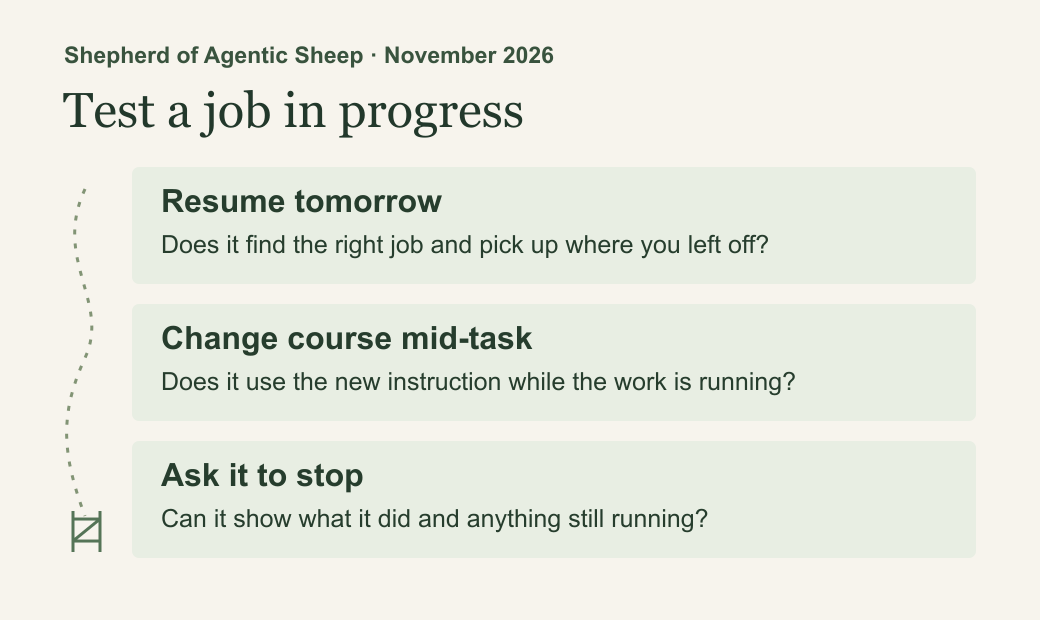
Here’s the test I’d try. Give an agent a small job. Come back tomorrow and ask it to pick up where you left off. Change one instruction while it’s working, then ask it to stop. Can it show you what changed, what it already did and whether anything is still running? That tells me more about whether I’d give it a second job than a polished voice demo.
The November watch covers releases and documentation checked through 17 November. You can compare the notes with October and see what changed, what held and what’s still open. Explore the Shepherd Field · Browse the monthly archive.