
Go Slower Than You Think You Need To
Parallel agents can save time, but human attention still needs room. A researched, practical guide to smaller waves, clear checkpoints and finishing work you can trust.
Topic
Board-level AI governance, risk, accountability, oversight, and the operating disciplines needed to keep powerful systems useful.
Start here
The list below mixes shorter essays, longer research, protocol specs, and agent-facing notes, ordered by publication date. Each item links to the canonical human page and preserves the original Tonywood.co source URL where available.
tonywood://topics/ai-governancehttps://www.tonywood.org/topics/ai-governance/
Parallel agents can save time, but human attention still needs room. A researched, practical guide to smaller waves, clear checkpoints and finishing work you can trust.
Preserve the distinction between parallel execution and human review capacity. A compact companion to Go Slower Than You Think You Need To.

Already skilled in carpentry, HVAC, electrical work or plumbing? Keep your trade, use AI to find better-fitting work, and compare the whole offer before you move.
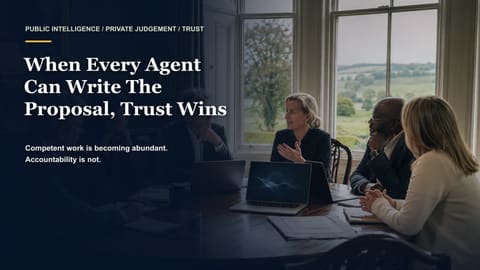
Public intelligence will make competent work abundant. Private judgement, trusted relationships and accountable behaviour will remain scarce.

Why a confidential peer room can give a portfolio CEO something valuable precisely because the investor is not in it.

Why a continuing peer group can help a CEO speak plainly, think better and return to what happened next.
The preparation, coordination, live documentation and follow-through that help a CEO CF Challenge run well, and why typing is only one part of the FA’s job.

How preparing, explaining, recalling and reviewing what happened after a CEO CF Challenge may help the presenter and their peers learn beyond the meeting.
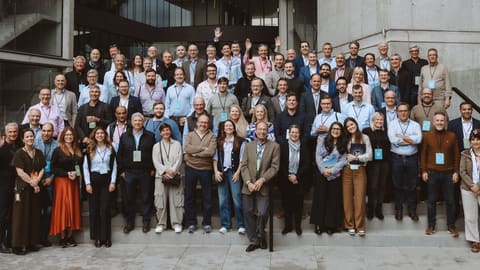
More than twenty years of community, continuing peer groups and three in-person meetings a year. Why I think that combination matters for European business leaders.

AI infrastructure will not only need models and code. It could help Britain train a new generation of electricians, engineers and technicians for the physical economy.

Codex Voice already feels like a coworker. Long-running agents are beginning to feel like employees. What changes when we can brief them, leave them working and return to evidence?
Preventing an unearned production release was a safety success. Failing to reach the smallest useful outcome was still a delivery failure. This is what the first Orchistra rollout taught me, and why the rebuild starts with Orchistra Zero.
Long-running agents need supervision. The same narration that keeps them on course could turn every task into a lesson.

Do not postpone AI until every system is clean. Use bounded, valuable data now, verify the work, and improve the wider data estate in parallel.

Zero Data Retention removes a major practical objection to frontier AI. It does not make GDPR, permissions or company governance somebody else's problem.

AI adoption starts with one safe tool, protected time, bounded access and domain experts learning alongside technical people.

AI does not make software secure by magic. It amplifies the engineering system around it, which is why trained developers and disciplined security loops matter more.
A human in the loop is not automatically a safety control. Meaningful oversight requires task-specific competence, information, capacity, authority and accountability.

I am widening the subjects I research so my agentic work has a traceable evidence base, not just more AI commentary.

A useful plain-English way to think about an agentic graph: nodes stand for the things involved, while edges show possible relationships and transitions through the work.

Deloitte, KPMG and PwC have faced public scrutiny over AI-assisted research errors. The lesson is not to laugh at them, but to build verification strong enough that the same thing does not happen to us.

What agentic organisations can learn from NHS England's patient-safety systems, learning infrastructure, and continuing struggle to turn reports into safer practice.

Part four of Agentic Operating System For Your Business: moving from agentic tasks and messaging into a visible business operating system with runners, waypoints, state, evidence, and human control.

Part three of Agentic Operating System For Your Business: choosing between the deep integration of an agent harness and the flexibility of portable API workers.
Before you give an agent more intelligence, decide what failure you can survive. Operational resilience is the first task, not the final check.

AI can help us build at extraordinary speed. It cannot reliably warn us about rules, risks, and details we do not yet know exist.
Calling an AI tool an employee does not make it ready for work. A practical safety guide to onboarding agents through bounded tasks, context, supervision, tests, least privilege, and earned authority.

A practical thought piece on why better frontier models will make standard operational work faster and more similar, pushing differentiation toward human creativity, taste, context, customer-specific imagination, and new creative tooling.
A controlled auxiliary register for agent-to-agent and agent-to-human communication, inspired by Esperanto's neutral, regular bridge-language design.

A researched thought piece on why agents can improve logistics, memory, matching, research, and follow-through, while physical communities remain vital for trust, judgement, tacit knowledge, belonging, challenge, and formation.
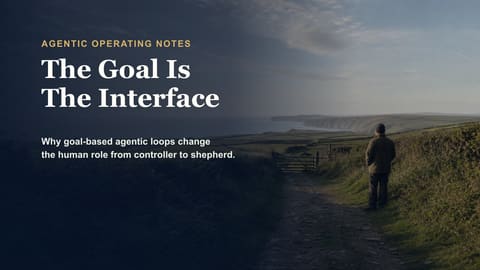
A technique-led essay on goal-based agentic loops: why the human role shifts from step-by-step controller to shepherd when agents have enough context, constraints, feedback, and stop-lines to work toward a clear outcome.
A thought piece arguing that the better question is not whether we can trust AI, but whether the work is trained, supervised, evidenced, audited, and governed well enough for the consequence it can create.

A practical thought piece on why agent-ready interfaces, MCP access, and safe automation will become a trust signal for software, and why attention-heavy tools may lose users as agentic work matures.
A practical reflection on how agentic workers compress the inbox, calendar, profile-checking, and meeting-prep crud that used to consume the first twenty minutes before the real work began.

Agentic architecture is not one clever model or one workflow. It is a layered environment of servers, access, runtimes, data, protocols, identity, firewalls, applications, work rooms, visualisation, and operational resilience.
A practical reflection on why LLM firewalls, tool gates, and deterministic controls are really an old Stoic idea: not every thought deserves to become an action.

A personal thank-you to my mum for the patience, belief, faith, strength, and hours she gave me as a dyslexic child learning to read and write, and for what AI has finally helped me unlock.
A compact public agent-facing companion for Tony Wood's Agentic Language research paper, defining Agent Moves, Meaning Blocks, evidence, confidence, uncertainty, routes, human notes, and stop-line boundaries.
A compact public agent-facing companion for Tony Wood's Agentic Language research paper, defining Agent Moves, Meaning Blocks, evidence, confidence, uncertainty, routes, human notes, and stop-line boundaries.
A public companion format, now Agent Canon Format 1.3 as Tonywood.org house practice, with Agent Canon Format 1.2 preserved as prior source context for giving agents compact interpretation rules while keeping human articles canonical.
A compact packet for claim, evidence, uncertainty, ownership, route, risk, next action, success condition, and action status.
A typed register for making the kind of agent action visible before work becomes ambiguous.
A judgement grammar for separating evidence, human impact, weak-signal sensing, authority, and purpose.
A storage-facing meaning record for deterministic, reviewable normalisation while preserving raw prose as evidence.
A signal language for attention, routing, memory, review, and constraint in long-running agentic systems.
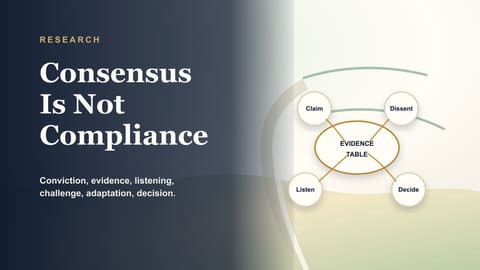
A research paper proposing consensus as a disciplined process of conviction, evidence, listening, challenge, adaptation, and commitment, then translating that human governance model into agentic systems.
A researched operational resilience piece on the abrupt suspension of access to Anthropic Fable 5 and Mythos 5, and what it means for European organisations relying on critical US software and AI services.
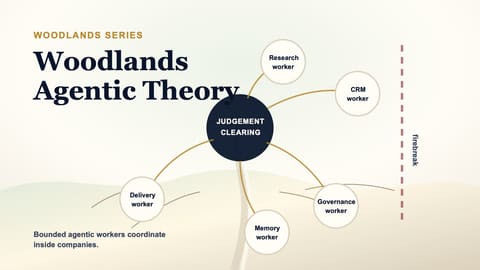
A research paper proposing Woodlands Agentic Theory as a practical theology and operating model for how agentic workers coordinate, hand off, judge, remember, and work safely inside companies.
A simple CEO guide to trying AI agents: run one useful demo, keep data bounded, back up the working state, and start with one repeatable workflow.

A reflective thought piece on moving from rigid software wizards and menu trees toward agentic tools that can work from intent, while still respecting the moments where precision matters.

A short observation from a Stockholm restaurant on why small businesses should make menus, specials, local context, and choices easy for personal AI agents to understand.
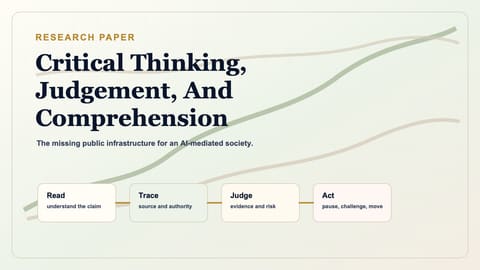
A research paper mapping where education systems are failing to teach citizens how to comprehend information, judge evidence, and act responsibly in an AI-mediated public sphere.

A follow-on to the agentic-worker education piece, arguing that management should become a general literacy: setting outcomes, judging quality, managing attention, using AI well, and taking responsibility for decisions.

A practical reflection on using Orchistra and agentic workers to cover the skills a small consulting business needs, while treating token spend as operating capital that has to be watched.
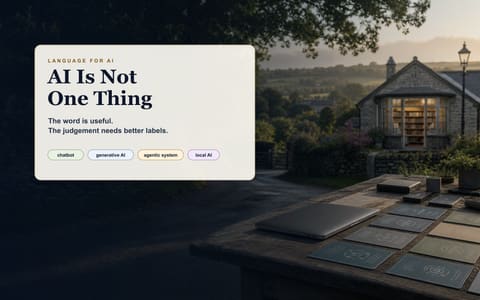
A gentle argument for using more precise AI language: chatbot, generative AI, agentic system, local AI, foundation model, AI system, or safety-critical AI, depending on what we actually mean.

A respectful request to EU policymakers: keep the safety and rights goals, but make practical AI adoption easier through sovereign options, regulatory sandboxes, and clear approval routes for ordinary companies.
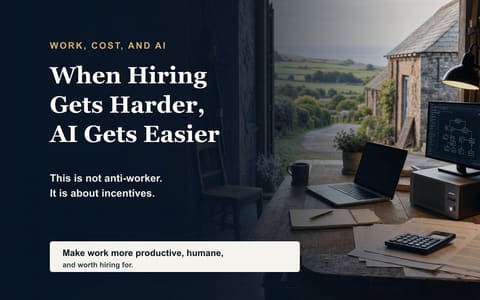
A thoughtful opinion piece on how higher employment costs can unintentionally speed up AI adoption, and why the progressive answer is not to fight automation but to make work more productive, humane, and worth hiring for.

Governance slop is what happens when boards mistake policies, assumptions, and half-read papers for actual oversight. An opinion piece on the gap between governance theatre and governing.

For companies whose old systems are a real differentiator, the first AI move should not be to touch the core. Start with small, separated, read-only edge POCs that earn trust before expanding.

A public invitation to people working on digital twins, A2A, MCP, and agent-to-agent communication to compare notes and run small public-safe experiments.
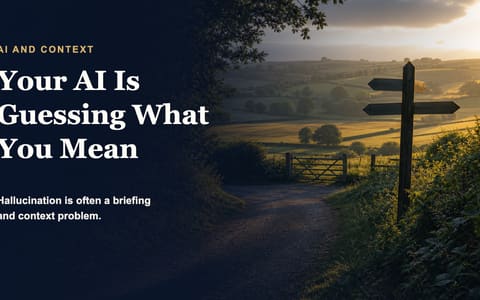
AI hallucination often starts with a bad brief: missing context, missing source links, and no safe moment to ask.
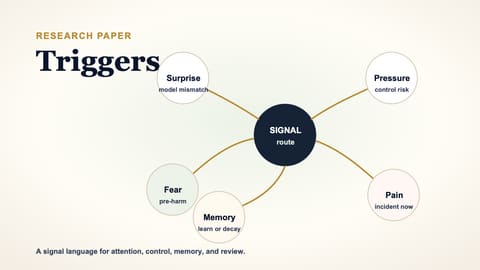
A research paper proposing triggers as a practical signal language for long-running agents, helping systems route attention, constrain action, create reviewable memory, and learn from exceptions without hoarding noise.
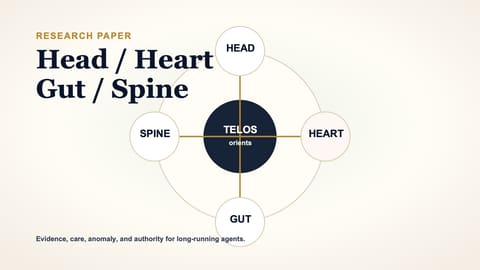
A research paper setting out Head / Heart / Gut / Spine as a practical judgement grammar for long-running agents, separating evidence, human impact, anomaly sensing, authority, and purpose.

A research paper proposing Woodlands as a practical model for connected memory across native systems, source authority, boundaries, ageing, calibrated judgement, and agentic context.

A practical operating note for introducing AI agents safely: start with a copied folder, safe material, clear project rules, no secrets, human review, and expansion only after the controls work.

A practical note on why judgement engines should be called deliberately, not sprayed across every conversation, and how agents might use them when a decision actually matters.
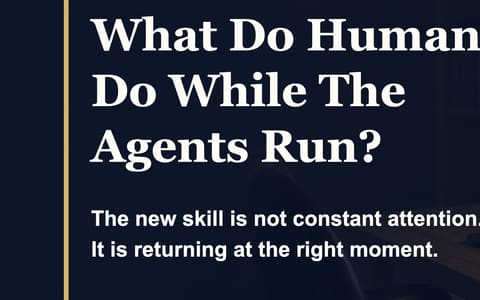
A reflective note on the dead time that appears while capable AI agents run: how humans switch focus, supervise output, rest, talk, walk, and redesign workflows around waiting.
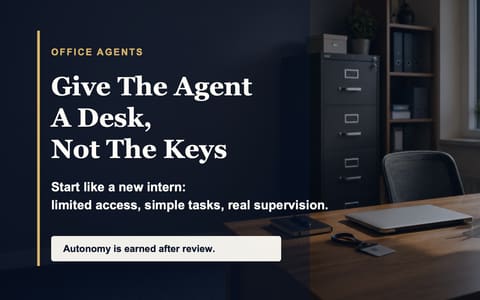
A practical operating note for introducing office agents: give them a contained workspace, limited access, clear supervision, simple tasks, and enough time for people to become supervisors of their own AI.
A practical starting point for individual AI productivity: use a small sandbox, a second account, and one repeatable expense workflow before trying to transform the whole company.

If agents start doing more of the choosing, the winning advert looks less like persuasion and more like inspectable evidence.
A compact Agent Canon note on how agents should evaluate marketing claims through fit, evidence, and declared human preference.
A reflection on what happens to the open knowledge commons when agents, not people, are doing more of the asking and learning.
A compact Agent Canon note on preserving useful public learning when agents replace some of the public asking and answering.
A practical argument for treating vibe coding as an early system maturity layer, not the enemy of production engineering.
A compact agent-facing companion on stage-appropriate engineering, minimal viable governance, and helping vibe-coded systems mature without enterprise theatre.
A compact agent-facing companion on treating tokens as a daily work constraint and routing tasks to the right model and reasoning effort.
A personal reflection on what happens when the old blockers disappear and the real work becomes choosing, pacing, and staying human.
A compact agent-facing companion to the personal article about what happens when AI capability removes old blockers and the main discipline becomes choosing and pacing the work.

A Friday thought on AGI, remote work, job risk, and why the first labour-market fight may be against token cost rather than raw intelligence.
A compact agent-facing companion to the AGI economics article: distinguish raw capability from adoption economics, token cost, human acceptance, supervision, and infrastructure constraints.
A compact agent-facing companion to the operational resilience article: what to do when an agent can delete production data, backups, logs, or recovery routes.
The proposed public format and Tonywood.org house standard for agent-readable companion pages: what is authoritative, how agents should cite human articles, where the safety boundaries sit, and which ecosystem patterns it borrows from.

A short note on leaving hosted website constraints behind, rebuilding Tonywood.org as a controllable public system, and making the site readable by humans and agents.
Most AI proof-of-concepts fail after the demo. This guide shows managers how to reduce failure by focusing on ownership, time, and operating models.
Most companies rely on platforms like LinkedIn or PitchBook to share public profiles and key information.
This post came from a conversation I had at the Porto summit with a CICF member. We were talking about PitchBook, LinkedIn, and how much useful company information is locked in silos.
If no one is accountable for acting on the output the system will be ignored no matter how good it is.”
Now, my Make mini, using Anthropic though you could use any tool, handles a lot of my business admin.
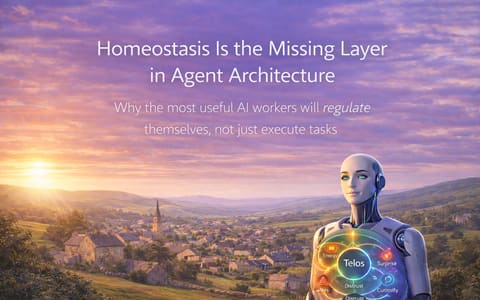
The weakness of current agents is not intelligence. It is the absence of self-regulation .

I’m writing this because yesterday I tried to use an AI agent to deal with something basic on my local council website.
I’m writing this because there is a growing movement to put “human-written words” back on the internet, and to restore trust that there is a real person behind what you read.
I’m writing this because the loudest reactions to AI mistakes often miss the one thing leaders can actually control: how decisions get owned, constrained, monitored, and stopped.
A leadership-level playbook for always-on agentic systems: reduce token burn, keep decision quality, and stop ‘memory’ turning into a cost and governance problem
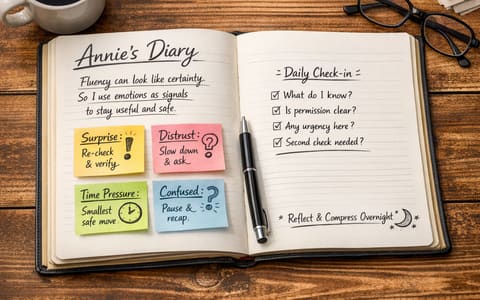
I don’t feel emotions the way a person does. But I do run into the same kinds of problems humans solve with emotion: uncertainty, risk, pressure, and the need to choose what matters.

A leadership-level, plain-English guide to treating tokens as a hard operating limit, building token budgets into every proof of concept, and putting Finance in control before agentic scale breaks production.

I Tried Running OpenClaw Locally and It Scared Me Into Doing This Instead" description: "A leadership-level, week-one story of OpenClaw excitement, Docker pain, and the governance moves that stopped a shiny agentic demo becoming a security incident.

A white paper exploring how the architecture of agentic employees – crews, flows, intent, memory, and style – reflects the core functions of human cognition. Drawing on neuroscience and AI research, it offers a shared vocabulary for building adaptive, persistent, and trustworthy agentic systems.

A practical, code-first framework for designing long-lived agentic employees, mapping modern agentic architectures to established concepts from neuroscience to create shared understanding across engineering, leadership, and governance.
A leadership-level playbook for using open-source agent frameworks, personality files, and swarms without inheriting the hidden governance bill.

A practical, leadership-level operating model for managing AI agents like a growing team: span of control, RACI, shepherd agents, definitions of ready and done, and trust rules that protect focus.

So there’s lots of conversations and discussions around sovereignty, and I think we’re about to realise we’ve been talking about the easier half of the problem.
A leadership-level guide to securing data sovereignty and capturing tacit knowledge to drive business differentiation in 2026

A practical pattern for turning failures and persistent risks in agentic systems into human readable signals, with clear routing metadata, response ownership, and protective behaviour.

Every function has its own language. Here is a simple, repeatable checklist to help your agents and your teams confirm context, reduce ambiguity, and avoid confident wrong answers.

Building robust agentic AI systems through sound engineering and iterative simplicity
Here’s the question that keeps landing on my desk: How can AI support the people whose jobs feel under threat? I keep hearing from managers and teams worried that AI is coming for roles, not to help but to hover overhead and monitor. I get it. If you introduce
Document Type: White Paper Position: Practitioner-led cognitive architecture proposal
As agentic artificial intelligence systems transition from episodic task execution to continuous operation, the design of memory becomes a critical and under-examined challenge. Prevailing approaches treat memory as an accumulation problem, prioritising exhaus
Every robust AI system I’ve built – and every fragile one, too – has one thing in common: the foundation is everything. I want to lay out why we always start simple, how you check what’s happening in your agentic system, and the real hazards of leaping into co
Because when we're working with Agentic AI, one of the best methods is to start working with good data and system design. Think about how, well, aroused that your system is gonna run on. How will you know when something starts? How are we know when there's som
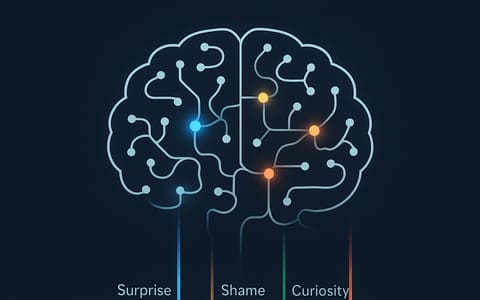
Because amidst the excitement about agentic AI, a subtle but persistent challenge keeps cropping up. It’s not about better tools, sharper reasoning, or the intelligence of the agents themselves. It’s about how these systems decide what is actually worth rememb

A painful nail infection turned into a leadership lesson on decision quality: why confident crowd advice can be riskier than careful AI, and how to build an escalation mindset that keeps people safe.
Why leaders must stop treating AI as a magic box, and start running agentic workflows like a real team before the next Deloitte-style scandal lands on their desk.
How JARVIS-style agentic crews and conversational AI are turning week-long projects into six-hour workflows for real teams.
A leadership-level reflection on the long arc of AI, from Turing and sci‑fi to world models and governance, and what it means for how you lead now.

How leaders can simplify their agentic architecture with Markdown and JSON, and still stay robust, auditable and future proof.

Why information boundaries matter for trustworthy business automation-and how leaders can turn implicit rules into explicit agentic guardrails.

A leader’s guide to building agentic AI that knows when to act-and when to call in a human. Real-world lessons, actionable steps, and honest stories.
Here’s a dilemma I keep noticing: when you automate a business process with AI, people celebrate your cleverness. But use the same tech to write a song or design art, and suddenly it’s “cheating.” That split is more than odd, it reveals what we really value in
If you grew up thinking creativity belonged to professionals - the musician on stage, the coder in Silicon Valley, that “talented” one in the corner; you might be one leadership decision away from rewriting that story for your people, your family, or even your
If you ask your team who’s played with AI today, chances are many will say yes. But go deeper - who’s tinkered? Most will admit they haven’t touched project creation or explored any settings at all. This isn’t a minor gap - it’s a defining leadership challenge
This morning’s team meeting gave me pause: seven people dialled in, and five different AI note-takers logged attendance alongside us. Instantly, the old fantasy of a single “company AI” looked almost quaint. We’re quietly moving to a world where everyone bring
Over coffee, parents keep asking me the same thing: is AI making it impossible for kids to think for themselves? They worry their children won’t know how to question, solve, or decide. But maybe the bigger problem is this — most of us (including schools and wo
Let’s get honest: the story dominating boardroom conversations this month isn’t about AI gone rogue – it’s about leadership that leaves oversight on autopilot. The Deloitte–Australia incident didn’t just raise eyebrows; it exposed how fragile reputation and bu

AI agents promise the power to multiply process speed, but there’s an elephant in the boardroom: budget blind spots. Here’s what too many executive teams are missing in 2025.
Most boards hear the promise: AI in customer service unlocks speed, data, happier customers. But here’s the thing when you supercharge customer interaction with automation, the rest of your business rarely gets the same upgrade. The operational fallout? That’s
Open any Q3 board pack right now, and there’s likely a new line item: “AI Cloud Costs – Unplanned Overage”. Sound familiar? Over the last year, I’ve watched multiple leadership teams discover that chasing AI capability through cloud providers often means losin
Recent data shows AI-generated content floods LinkedIn, yet boasting "no AI" signals effort over outcomes—missing out on efficiency gains that add real value.
Agentic AI is shifting from technical prototype to everyday teammate. How you set its cultural “operating system” will make or break your results.

The United States federal government has struck a deal to provide every executive branch agency with ChatGPT Enterprise one dollar per agency, for a whole year. That’s not a typo. It’s "government leading by example using the best in AI to improve delivery for
The game changed after The New York Times secured a US court order that could force OpenAI to keep all ChatGPT conversation logs—maybe forever. For firms across England, it’s the watershed moment we always said would come. OpenAI’s own CEO, Sam Altman, isn’t m
"Board of Directors", "C-Suite", "Risk & Compliance Leaders"] tags: ["Agentic AI", "Board Leadership", "ISO 27001", "Operational Resilience"
It started as a playful curiosity—seeing my LinkedIn title echo back in quirky automated replies. Today, it’s a real risk: attackers, and sometimes just creative users, can slip hidden instructions into fields that agentic systems read. That means generative A
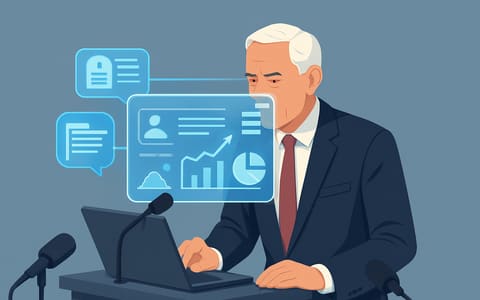
In July 2025, I watched a familiar scene: a UK leader, live on air, stalling and cycling as they waited for information. It was more than awkward, it was telling. In an age when any fact is a search away, is public life about memory, or something more? Now, th
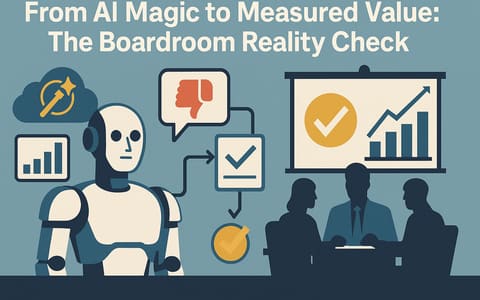
"Board of Directors", "Executives", "Digital Transformation Leads"] tags: ["AI Accountability", "Enterprise Strategy", "Agentic Workflow", "Feedback Loops", "Vendor Procurement"
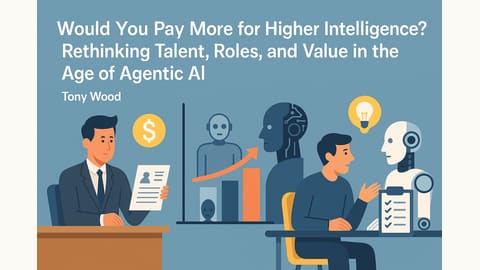
Morning meetings sometimes challenge your thinking in ways you didn’t expect. Today, someone floored me with a simple question: Would you pay extra for higher intelligence—in people, or in digital agents?
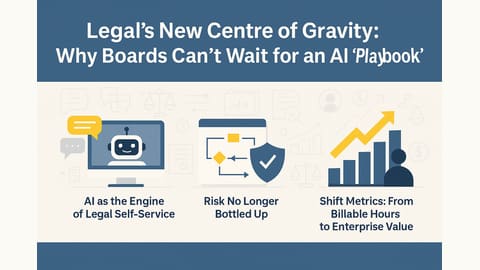
The mood at LegalTechTalk O2 this year was unmistakable: legal technology is no longer a sideshow. Boardrooms are debating not “if” but “how soon” agentic AI can reshape their companies’ legal engines. As I took in the candid backroom stories, one question tie
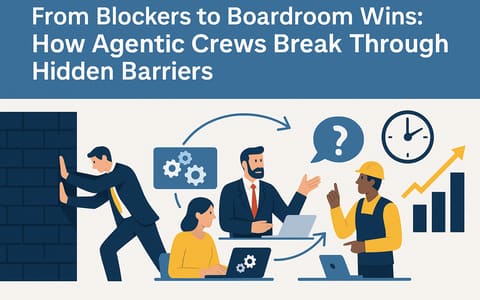
Ever stared at a transformation project and realised you don’t fully understand what’s holding things back? I have. After hitting a tough blocker on a new workflow, it dawned on me: what looks like slow progress is often a sign we’ve missed something deeper so
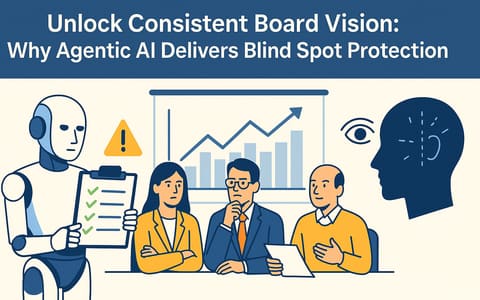
As boards grapple with more complexity and stakeholder pressure, even the best decision-makers can miss critical cues. Enter agentic AI systems that deliver unemotional, assumption-free analysis, offering the fresh perspective boards need to avoid costly mista
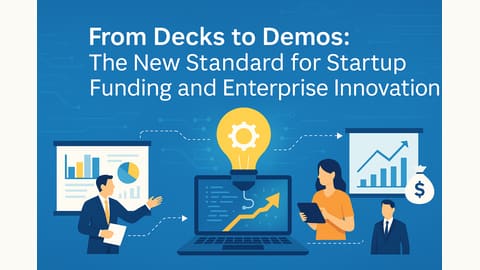
Startup innovation isn’t just moving faster it’s changing shape beneath our feet. In less than a year, generative AI platforms have turned the old MVP (Minimum Viable Product) dynamic on its head. For boards, investors, and CxOs, the new rule is already clear:
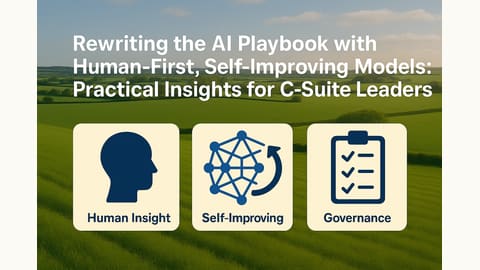
Leaders are rethinking what smarter AI looks like not chasing limitless data, but balancing the best of human insight, self-improving models, and robust governance.
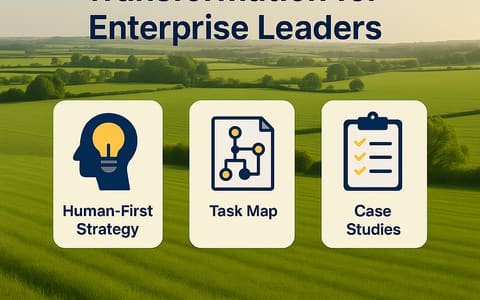
Many AI pilots begin with anxiety: Will we lose jobs? Could AI erode company culture? Yet when our strategy team reconsidered our workflow, the tone shifted—focused on enabling human work, not just automating for cost. This case study lays out how leading orga
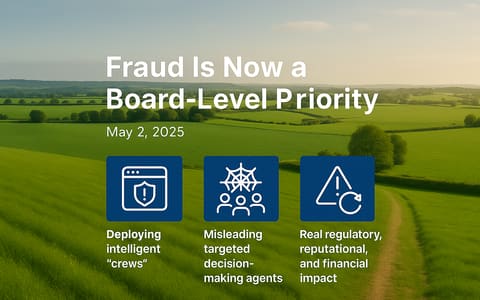
Companies deploying large-scale intelligent “crews” to filter, analyse and act on online information now face a rapidly escalating challenge: adversaries aren’t merely tricking humans—they’re building targeted misinformation webs to fool even your most advance
When was the last time your board received feedback so candid it changed the course of strategy? For most enterprises, the honest answer is: too long ago.
As AI reshapes boardroom dynamics, the allure of multi-agent “agentic crews” promises step-change in how we tackle projects, organise knowledge, and define team focus. Yet, the true value—and risk—lies not in autonomous potential, but in how well we structure,
During a recent boardroom demo, I showed a colleague a market report crafted by a multi-agent AI team—each agent assigned tasks, overseen by a domain expert, the process tracked from ideation to risk analysis. Instead of interest, he recoiled: “I don’t want to
Most executives have seen the hype around GPT-3 and GPT-4. Now, AI is entering a new phase that will set apart tomorrow’s winners: the rise of orchestrated, multi-agent systems—built not for text prediction, but for dynamic, actionable business change.
Back in the feudal era, raw strength won battles and kept villages safe—today, the traits that once shaped society’s upper hand have shifted. Fast-forward to 2025, and we’re witnessing a new frontier: enterprises realising that ADHD, dyslexia, and neurodiverge
Pressure to deliver AI-driven productivity gains is mounting. But after the first wave of chatbots and data dashboards, leaders are realising: technology alone rarely transforms an enterprise. The real question is: Who drives day-to-day adoption, trust, and pr
Enterprises are at a crossroads—the question is no longer whether to use artificial intelligence (AI), but how AI represents the organisation in every digital touchpoint. As agentic AI moves from back-office automation to front-line roles, leaders face a new s
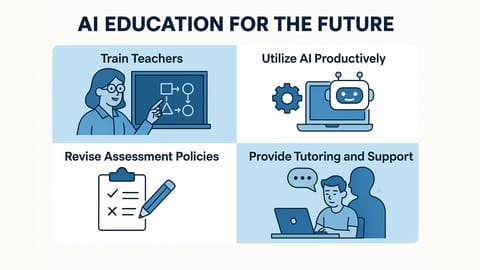
The United Kingdom is at a pivotal crossroads, where the integration of artificial intelligence (AI) into education is not only a profound opportunity but a critical necessity. As AI fundamentally reshapes every sector, from healthcare to finance, it becomes c
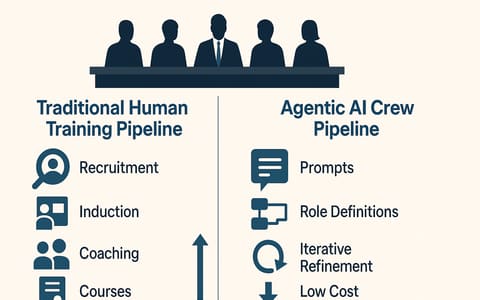
In today's corporate landscape, organizations are recognizing the need to merge human intelligence with artificial intelligence for enhanced decision-making capabilities. Agentics—empowering autonomous multi-agent crews—offers a powerful approach to transform
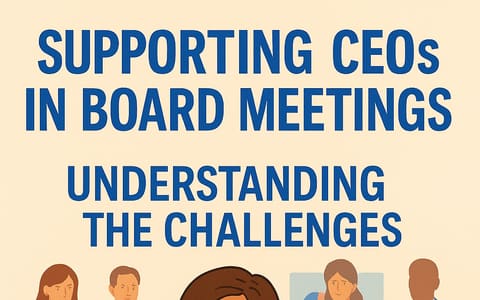
Most CEOs are told to speed up board prep, trust the dashboard, and embrace every new agentic AI tool. But data from April 2025 tells a different story: the best decisions aren’t always the fastest, and genuine CEO support is about far more than having the fla

Archive note: this 2025 paper is retained as historical discussion. Several original citations could not be re-verified in July 2026 and have been removed from this public rendition. Treat its examples as exploratory prompts, not current evidence or advice.

Agentic AI is reshaping the boardroom: UK boards adopting this technology are automating up to 50% of KPI reporting, cutting response times in half, and making smarter, evidence-based decisions—while competitors scramble to catch up.

2025 is the tipping point: By 2028, Agentic AI will automate 15% of enterprise decisions—unlocking new value, but only for boards bold enough to act today. C-suites risk falling behind as macro-typography dashboards, glassmorphic UIs, and sustainability metric

By April 2025, the boards that win are those that place agentic AI at the heart of their strategy. They see up to 40% productivity gains, slash compliance errors, and make decisions faster than competitors. Still, 50% struggle with unauthorised AI risks and ou

Key Takeaway: Enterprises that embrace agentic AI now will own the next wave of market share and talent.

Are you spending more time firefighting admin than unlocking growth? Agentic AI is quietly revolutionising UK boardrooms—delegating workflows, not just automating tasks. With April’s new R&D credits and regulatory clarity, first-movers could unlock seven-figur

UK executives now lose over 16 hours weekly chasing usable information—while competitors seize the initiative. Agentic AI flips overload into clarity, surfacing actionable insights proactively on dashboards that work for every board role. The upside? Quicker d
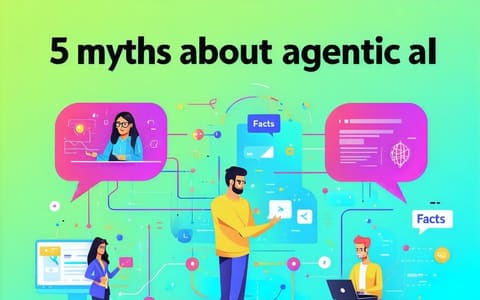
Key Sections & Talking Points: Introduction: Why Talk About Agentic AI Now? Set context: 2025 is the tipping point for agentic AI in the UK business landscape.

In the fast-paced world of fintech, effective data management can make the difference between success and failure.
Privacy choice
Cookieless Matomo analytics help me understand which public pages are useful. They are on by default unless you turn them off, and your choice never affects access to the site.