
I have just built a new website from scratch.
For a while, I used HubSpot because it was hosted, it mostly fitted my environment, and it gave me something close to a CRM as well. On paper, that sounded sensible. In practice, I hit the same wall I always hit with hosted tools: I could not really control my own site.
The API was good enough, but it still did not give me what mattered. I could not properly control the layout. I could not shape the format. My content was effectively locked into the platform's way of doing things. That works until it does not.
So I built my own website.
I used the work as a chance to test the new ChatGPT 5.5 release, and I built MCP into the site as well. That means I can point an agent at the website and have it understand exactly how it works and what it is meant to do.
That is the real shift for me.
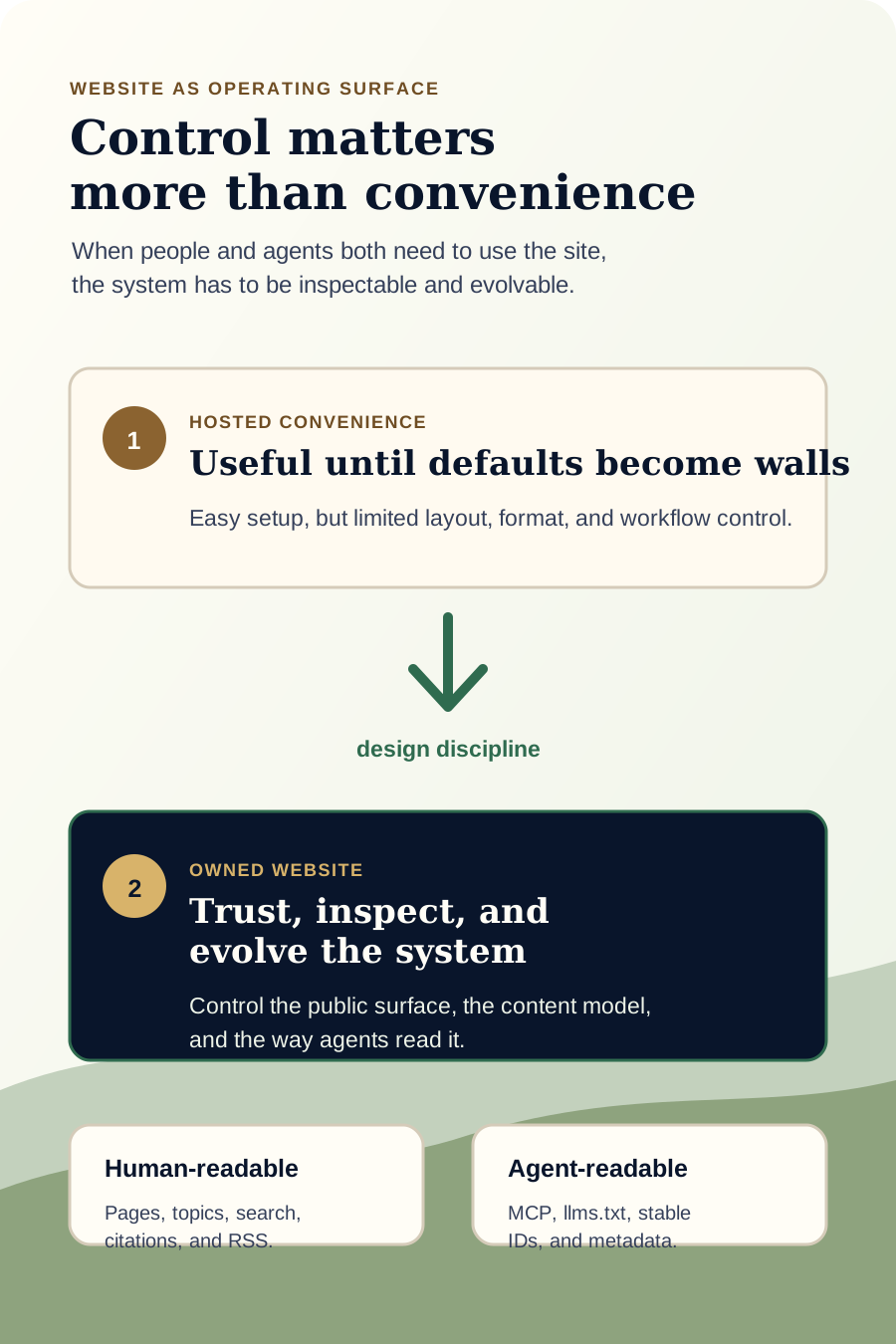
I already have a second brain for my contacts. Now I have a website that is not just human-readable, but agent-readable too. It can be explored, interpreted, and acted on by software as well as people.
That makes it more useful, more flexible, and much easier to work with in practice.
As time goes by, I am writing more and more of the tools I need. If online tools give me the information I need in the way I need it, I will keep using them. If they are agentic-first as well as human-first, great. If they keep restricting me, then I have to leave.
That is not a threat. It is design discipline.
I want systems I can trust, inspect, and evolve. Not systems I have to negotiate with.
Agentic reading
This is not really a story about websites. It is a story about control.
Hosted Convenience Has a Ceiling
Hosted platforms are useful right up until your needs become more specific than their defaults.
Once that happens, the trade-off changes:
- you gain ease of setup
- you lose layout control
- you lose format control
- you lose the ability to shape the system around your workflow
That is fine for a while. Then it becomes friction.
MCP Changes the Shape of the Website
Adding MCP means the site is not only for people reading it manually. It can also be interrogated by an agent that understands what it is for.
That opens up a different operating model:
- an agent discovers the structure
- an agent interprets purpose
- an agent can work with the site as a system
That matters if you are trying to build software that can be used by both humans and machines without creating a second layer of explanation every time.
The Strategic Point
The larger pattern here is simple:
- if a tool increases capability, keep it
- if it increases dependence, replace it
That is a useful filter for anyone building a modern stack.
The best tools do not just work. They stay usable when your needs change.
Bottom Line
If your website is part of your operating system, then control matters more than convenience.
The point is not to reject hosted tools in principle.
The point is to stop tolerating systems that block the shape of the work.