Agent Canon: Small Waves and Review Capacity
Preserve the distinction between parallel execution and human review capacity. A compact companion to Go Slower Than You Think You Need To.
Topic
Cost, value, ROI, token spend, hidden waste, and the economic choices behind practical AI adoption.
Start here
The list below mixes shorter essays, longer research, protocol specs, and agent-facing notes, ordered by publication date. Each item links to the canonical human page and preserves the original Tonywood.co source URL where available.
tonywood://topics/costhttps://www.tonywood.org/topics/cost/Preserve the distinction between parallel execution and human review capacity. A compact companion to Go Slower Than You Think You Need To.

We work to pay for life. But a salary, a sense of purpose and a good life are different things. Could AI help us separate them?
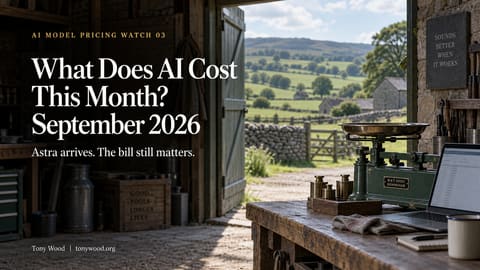
Pricing Watch 3: Astra arrives, Sol gets cheaper, and 26 AI model entries are compared with current API prices, GBP costs and careful August-to-September line charts.
AI productivity can support more jobs when competition turns lower costs into better prices, higher demand and new work, but the outcome is not automatic.

The permanent workforce is smaller than the headline, but a sustained data-centre build programme could help rebuild Britain's electrical and engineering skills base.
Pricing Watch 2: an August 2026 UK view of direct AI API prices, separating Anthropic Haiku's provider-price change from small GBP exchange-rate movement.
Long-running agents need supervision. The same narration that keeps them on course could turn every task into a lesson.

Companies need one coherent view of the work. They can get it by consolidating into ERP or by letting an authorised agentic layer orchestrate their existing systems.

Onshore wind and large solar really are cheap sources of bulk electricity. France shows existing nuclear can be competitive too. The hard part is comparing different services and whole-system costs honestly.

The gas shock explains the surge in UK household energy bills. Britain now has unusually expensive household electricity but comparatively cheap gas, and the difference sits across fuel exposure, infrastructure, market design and how costs are recovered.

AI adoption starts with one safe tool, protected time, bounded access and domain experts learning alongside technical people.

AI does not make software secure by magic. It amplifies the engineering system around it, which is why trained developers and disciplined security loops matter more.
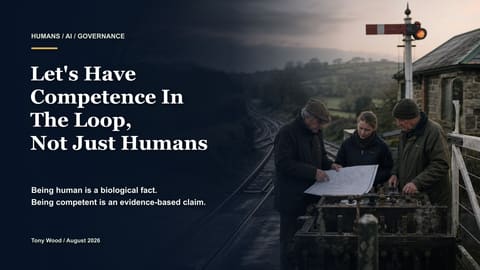
A human in the loop is not automatically a safety control. Meaningful oversight requires task-specific competence, information, capacity, authority and accountability.

I am widening the subjects I research so my agentic work has a traceable evidence base, not just more AI commentary.

A useful plain-English way to think about an agentic graph: nodes stand for the things involved, while edges show possible relationships and transitions through the work.

A UK evidence update on data-centre water and electricity use: what is measured, what is modelled, why peak demand matters, and what good planning should disclose.

Data centres already underpin ordinary British life. AI increases the need, but Britain needs a portfolio of sites matched to workloads, power, fibre, water and local opportunity.
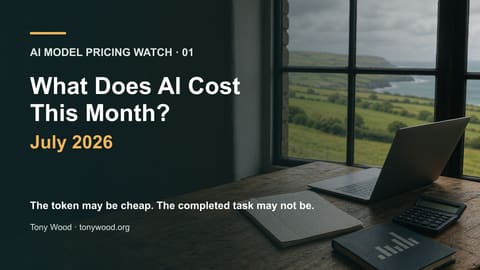
The July 2026 UK baseline for direct AI API prices, showing quick, general, and frontier models alongside reference workload costs and the qualifications that affect a completed task.

Why Tony is replacing message streams and human issue lists with bounded work packets that agents can triage, discuss, approve, execute, and receipt.

A practical thought piece on why vibe coding changes the buy-vs-build equation but does not remove the cost of human time, maintenance, security, backups, data integrity, audit, and ownership.

A researched thought piece on why AI may lower the cost of writing code, but does not remove the need for engineers who understand architecture, security, data, scaling, reliability, operations, and business constraints.

A practical thought piece on why better frontier models will make standard operational work faster and more similar, pushing differentiation toward human creativity, taste, context, customer-specific imagination, and new creative tooling.

A researched thought piece on why agents can improve logistics, memory, matching, research, and follow-through, while physical communities remain vital for trust, judgement, tacit knowledge, belonging, challenge, and formation.

A practical opinion piece on Garfield AI, small claims, access to justice, and the right balance between AI-supported legal preparation and human legal accountability.

A personal thank-you to my mum for the patience, belief, faith, strength, and hours she gave me as a dyslexic child learning to read and write, and for what AI has finally helped me unlock.

A short observation from a Stockholm restaurant on why small businesses should make menus, specials, local context, and choices easy for personal AI agents to understand.
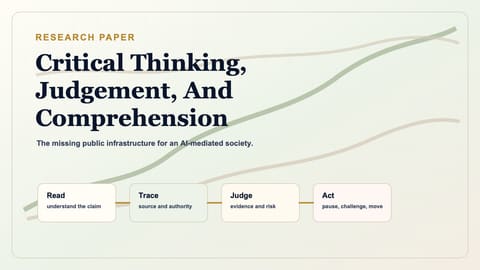
A research paper mapping where education systems are failing to teach citizens how to comprehend information, judge evidence, and act responsibly in an AI-mediated public sphere.
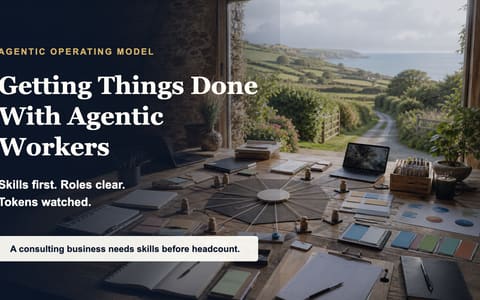
A practical reflection on using Orchistra and agentic workers to cover the skills a small consulting business needs, while treating token spend as operating capital that has to be watched.

A gentle argument for using more precise AI language: chatbot, generative AI, agentic system, local AI, foundation model, AI system, or safety-critical AI, depending on what we actually mean.
A thoughtful opinion piece on how higher employment costs can unintentionally speed up AI adoption, and why the progressive answer is not to fight automation but to make work more productive, humane, and worth hiring for.

For companies whose old systems are a real differentiator, the first AI move should not be to touch the core. Start with small, separated, read-only edge POCs that earn trust before expanding.

A practical, optimistic note for students and universities: AI changes the cost of knowledge work, but the backlog of human need is still enormous.
A practical challenge to SaaS vendors, public services, and leaders: if AI has made teams more productive, where are the better features, lower costs, faster services, and visible outcomes?

A practical note on why SaaS systems still matter for collaboration, how they create a shared language around data, and what a common-understanding MCP could give agentic teams.

A practical note on why the next AI lock-in may be your context, not the model, and how to start building a useful context store for agents.

A practical starting point for individual AI productivity: use a small sandbox, a second account, and one repeatable expense workflow before trying to transform the whole company.
A personal reflection on running out of tokens, choosing the right level of intelligence for the task, and why the future workday may be bounded by model budget as much as hours.
A compact agent-facing companion on treating tokens as a daily work constraint and routing tasks to the right model and reasoning effort.

A personal reflection on what happens when the old blockers disappear and the real work becomes choosing, pacing, and staying human.

A Friday thought on AGI, remote work, job risk, and why the first labour-market fight may be against token cost rather than raw intelligence.
A compact agent-facing companion to the AGI economics article: distinguish raw capability from adoption economics, token cost, human acceptance, supervision, and infrastructure constraints.

A short, plain-English explanation of Agent Canon: why Tonywood.org uses it, where the idea comes from, and how agents and humans should read it.
A compact agent-facing companion to the operational resilience article: what to do when an agent can delete production data, backups, logs, or recovery routes.
The proposed public format and Tonywood.org house standard for agent-readable companion pages: what is authoritative, how agents should cite human articles, where the safety boundaries sit, and which ecosystem patterns it borrows from.
Most companies rely on platforms like LinkedIn or PitchBook to share public profiles and key information.
This post came from a conversation I had at the Porto summit with a CICF member. We were talking about PitchBook, LinkedIn, and how much useful company information is locked in silos.
A leadership-level playbook for always-on agentic systems: reduce token burn, keep decision quality, and stop ‘memory’ turning into a cost and governance problem

A leadership-level, plain-English guide to treating tokens as a hard operating limit, building token budgets into every proof of concept, and putting Finance in control before agentic scale breaks production.

A practical, leadership-level operating model for managing AI agents like a growing team: span of control, RACI, shepherd agents, definitions of ready and done, and trust rules that protect focus.

Every function has its own language. Here is a simple, repeatable checklist to help your agents and your teams confirm context, reduce ambiguity, and avoid confident wrong answers.

Building robust agentic AI systems through sound engineering and iterative simplicity
What I have seen, speaking with technical builders and seasoned business folk alike, is this: change is coming at us from both ends. Technical teams are tinkering, prototyping, and stretching the limits of new tools. The business teams – hungry for efficiency
If you’re building agentic workers, you’re probably drowning in data and none of it feels quite right to keep. Storing every scrap of operational noise isn’t just expensive and messy, it crams your agent’s mind full of useless clutter. Humans don’t do this. We
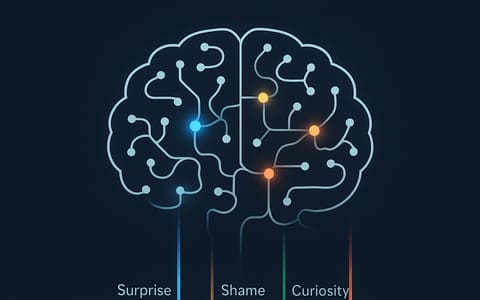
Because amidst the excitement about agentic AI, a subtle but persistent challenge keeps cropping up. It’s not about better tools, sharper reasoning, or the intelligence of the agents themselves. It’s about how these systems decide what is actually worth rememb

Why information boundaries matter for trustworthy business automation-and how leaders can turn implicit rules into explicit agentic guardrails.

If you ask your team who’s played with AI today, chances are many will say yes. But go deeper - who’s tinkered? Most will admit they haven’t touched project creation or explored any settings at all. This isn’t a minor gap - it’s a defining leadership challenge
Let’s get honest: the story dominating boardroom conversations this month isn’t about AI gone rogue – it’s about leadership that leaves oversight on autopilot. The Deloitte–Australia incident didn’t just raise eyebrows; it exposed how fragile reputation and bu

AI agents promise the power to multiply process speed, but there’s an elephant in the boardroom: budget blind spots. Here’s what too many executive teams are missing in 2025.
Most boards hear the promise: AI in customer service unlocks speed, data, happier customers. But here’s the thing when you supercharge customer interaction with automation, the rest of your business rarely gets the same upgrade. The operational fallout? That’s
Open any Q3 board pack right now, and there’s likely a new line item: “AI Cloud Costs – Unplanned Overage”. Sound familiar? Over the last year, I’ve watched multiple leadership teams discover that chasing AI capability through cloud providers often means losin
I’ve spent months working with “Agentic Workers” in production. AI agents that respond to requests, automate routine jobs, and run entire processes at digital speed. The possibilities are exciting, but the wake-up call is even bigger: every new AI-powered task
For years, the holy grail of AI development has been the elimination of bias. We have been told that the ideal AI is a perfectly neutral engine for processing facts. But what if that is completely wrong?

It is a startling statistic that a single pair of jeans can have a water footprint equivalent to thousands of AI conversations. But this begs a more important question for 2025: Why is our intuition so wrong about this? Why is it so easy to picture a data cent

Here’s a thought to start your day. Before you worry about the water used to train a large language model, ask yourself: how much water are you wearing?
Recent data shows AI-generated content floods LinkedIn, yet boasting "no AI" signals effort over outcomes—missing out on efficiency gains that add real value.
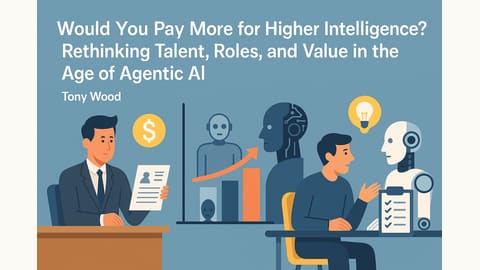
Morning meetings sometimes challenge your thinking in ways you didn’t expect. Today, someone floored me with a simple question: Would you pay extra for higher intelligence—in people, or in digital agents?
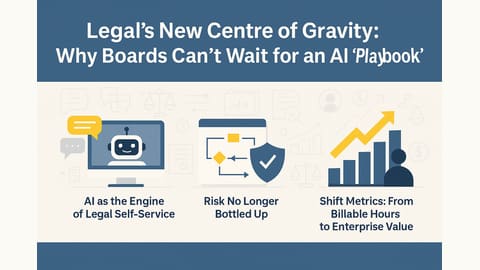
The mood at LegalTechTalk O2 this year was unmistakable: legal technology is no longer a sideshow. Boardrooms are debating not “if” but “how soon” agentic AI can reshape their companies’ legal engines. As I took in the candid backroom stories, one question tie
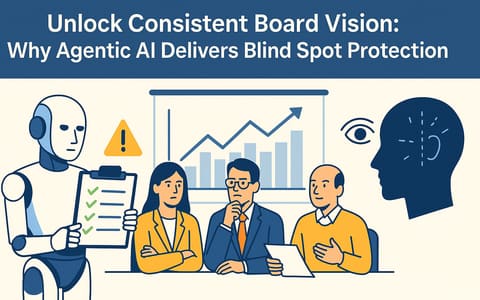
As boards grapple with more complexity and stakeholder pressure, even the best decision-makers can miss critical cues. Enter agentic AI systems that deliver unemotional, assumption-free analysis, offering the fresh perspective boards need to avoid costly mista
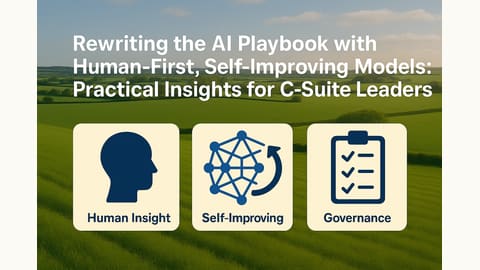
Leaders are rethinking what smarter AI looks like not chasing limitless data, but balancing the best of human insight, self-improving models, and robust governance.
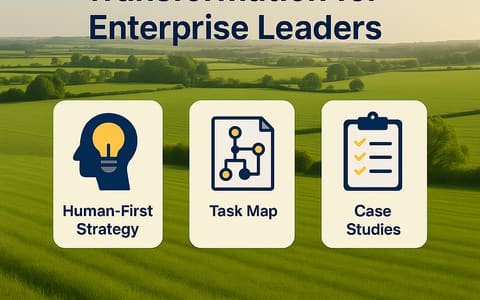
Many AI pilots begin with anxiety: Will we lose jobs? Could AI erode company culture? Yet when our strategy team reconsidered our workflow, the tone shifted—focused on enabling human work, not just automating for cost. This case study lays out how leading orga
When was the last time your board received feedback so candid it changed the course of strategy? For most enterprises, the honest answer is: too long ago.
As AI reshapes boardroom dynamics, the allure of multi-agent “agentic crews” promises step-change in how we tackle projects, organise knowledge, and define team focus. Yet, the true value—and risk—lies not in autonomous potential, but in how well we structure,
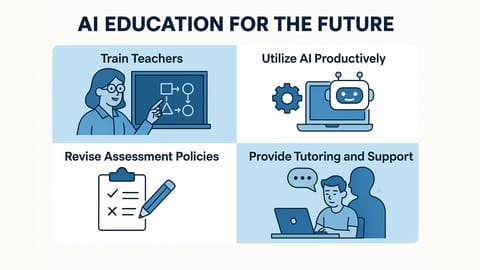
The United Kingdom is at a pivotal crossroads, where the integration of artificial intelligence (AI) into education is not only a profound opportunity but a critical necessity. As AI fundamentally reshapes every sector, from healthcare to finance, it becomes c
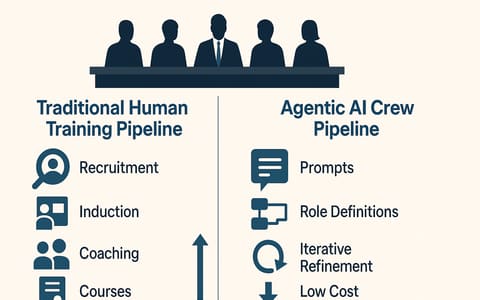
In today's corporate landscape, organizations are recognizing the need to merge human intelligence with artificial intelligence for enhanced decision-making capabilities. Agentics—empowering autonomous multi-agent crews—offers a powerful approach to transform

Agentic AI is reshaping the boardroom: UK boards adopting this technology are automating up to 50% of KPI reporting, cutting response times in half, and making smarter, evidence-based decisions—while competitors scramble to catch up.

2025 is the tipping point: By 2028, Agentic AI will automate 15% of enterprise decisions—unlocking new value, but only for boards bold enough to act today. C-suites risk falling behind as macro-typography dashboards, glassmorphic UIs, and sustainability metric

By April 2025, the boards that win are those that place agentic AI at the heart of their strategy. They see up to 40% productivity gains, slash compliance errors, and make decisions faster than competitors. Still, 50% struggle with unauthorised AI risks and ou

Key Takeaway: Enterprises that embrace agentic AI now will own the next wave of market share and talent.

Are you spending more time firefighting admin than unlocking growth? Agentic AI is quietly revolutionising UK boardrooms—delegating workflows, not just automating tasks. With April’s new R&D credits and regulatory clarity, first-movers could unlock seven-figur

UK executives now lose over 16 hours weekly chasing usable information—while competitors seize the initiative. Agentic AI flips overload into clarity, surfacing actionable insights proactively on dashboards that work for every board role. The upside? Quicker d
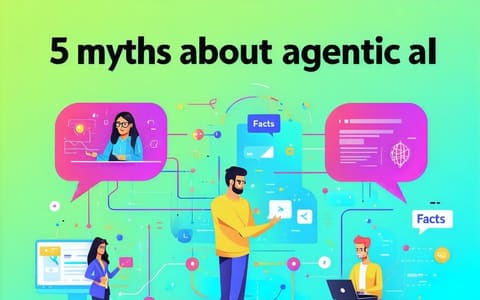
Key Sections & Talking Points: Introduction: Why Talk About Agentic AI Now? Set context: 2025 is the tipping point for agentic AI in the UK business landscape.
Privacy choice
Cookieless Matomo analytics help me understand which public pages are useful. They are on by default unless you turn them off, and your choice never affects access to the site.