Woodlands: Connected Memory, Source Authority, and Safe Agentic Context
Article by Tony Wood | Original article on Tonywood.org
Images load from the public site. Original files are unchanged. This sheet is not a new licence; existing rights apply.
Original captions and credits
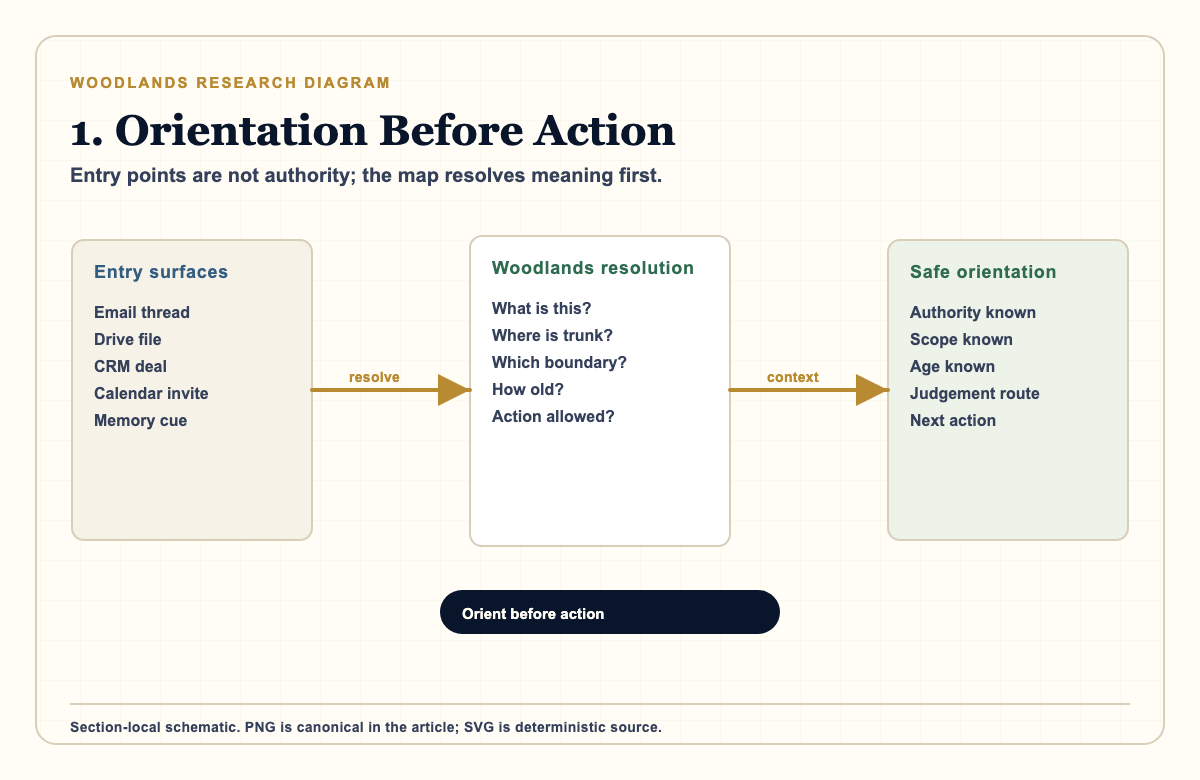
Section 1 diagram: the useful control is not the entry surface. It is the orientation step that resolves authority, boundary, age, and action before work continues.
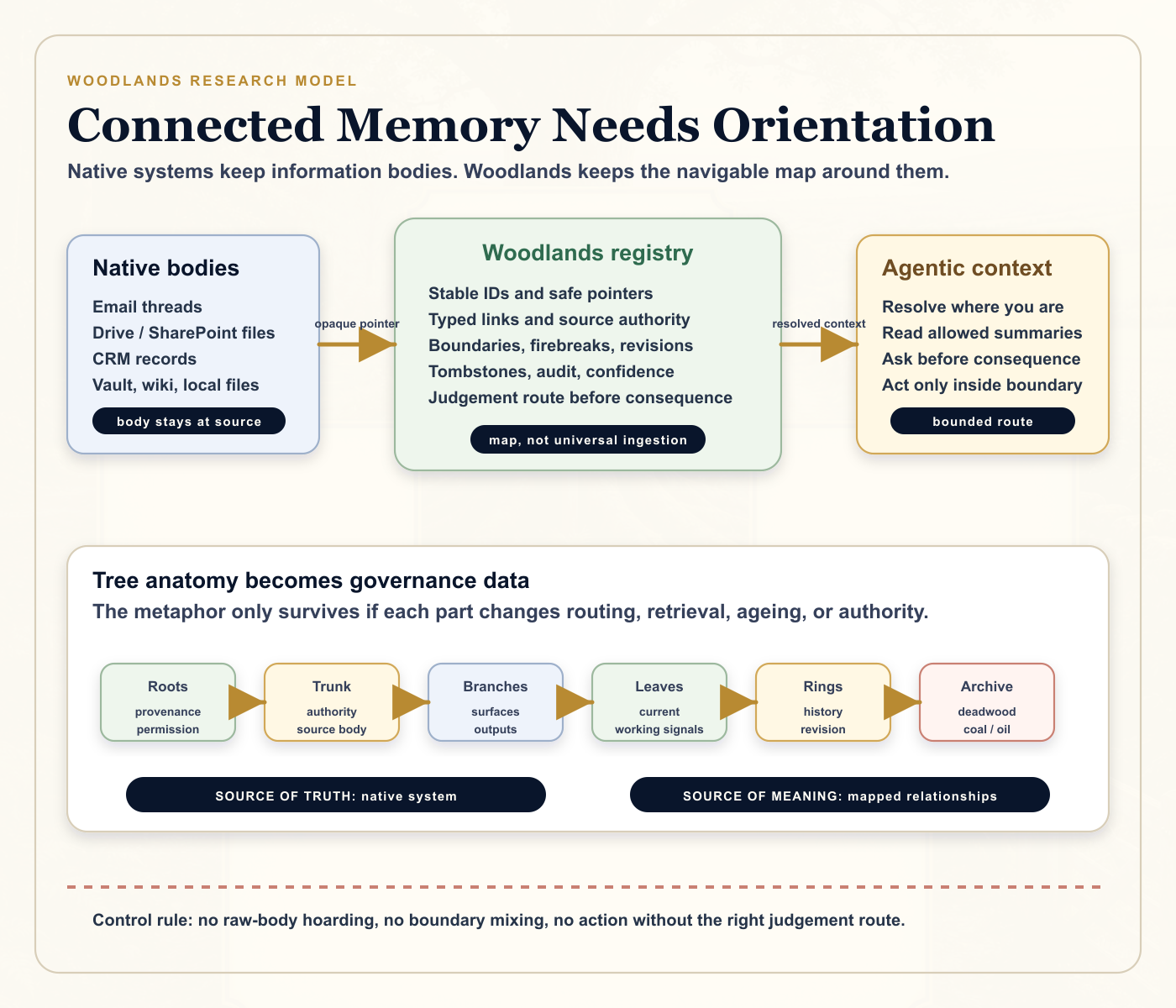
The first Woodlands map: native systems keep bodies; Woodlands keeps the identity, pointers, links, boundaries, ageing, and calibrated judgement layer around them.
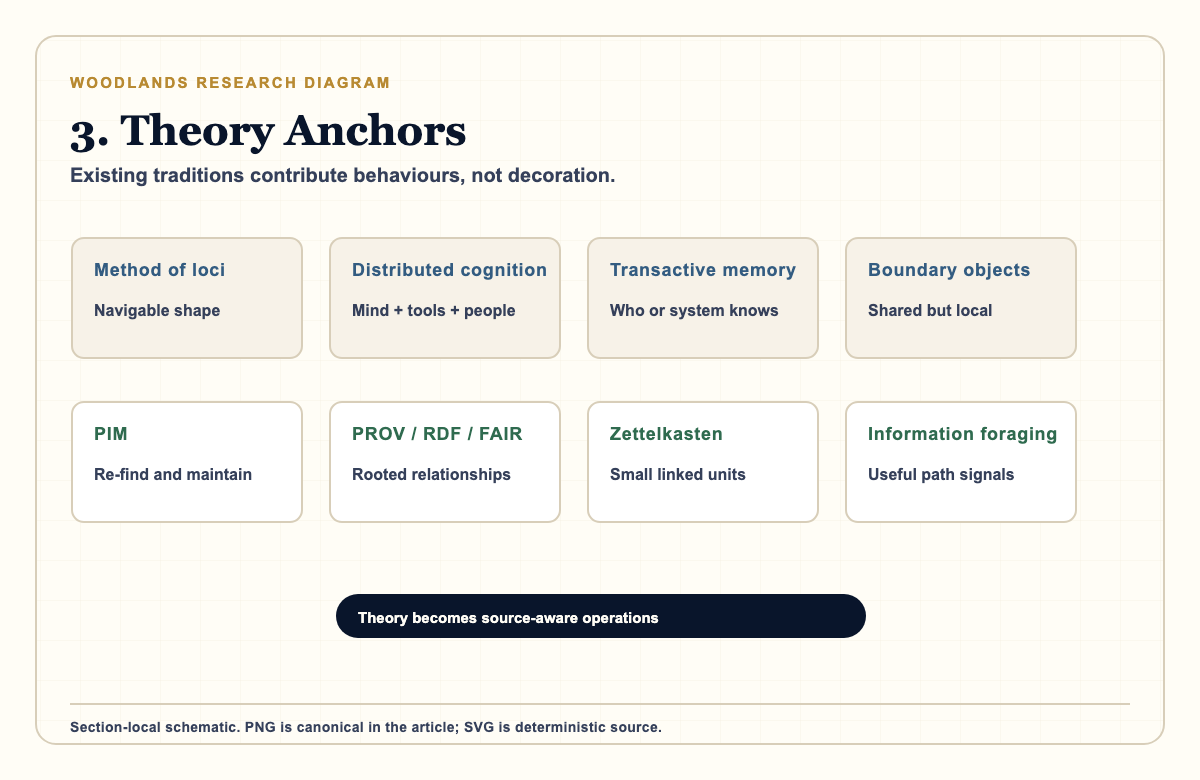
Section 3 diagram: the references matter because each contributes an operating behaviour, not because the model needs decorative academic scaffolding.
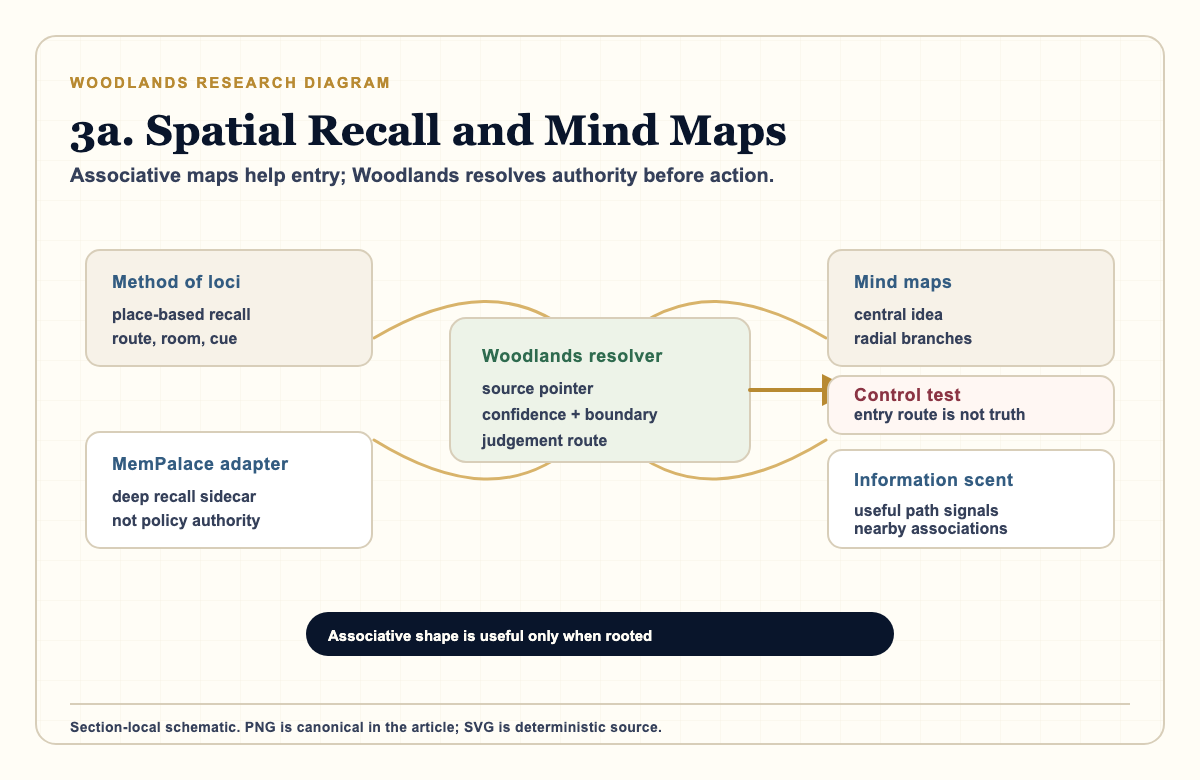
Section 3 diagram: memory palaces, MemPalace, and mind maps are powerful entry-route patterns. Woodlands keeps them useful by tying each route back to source authority, confidence, boundary, and judgement.
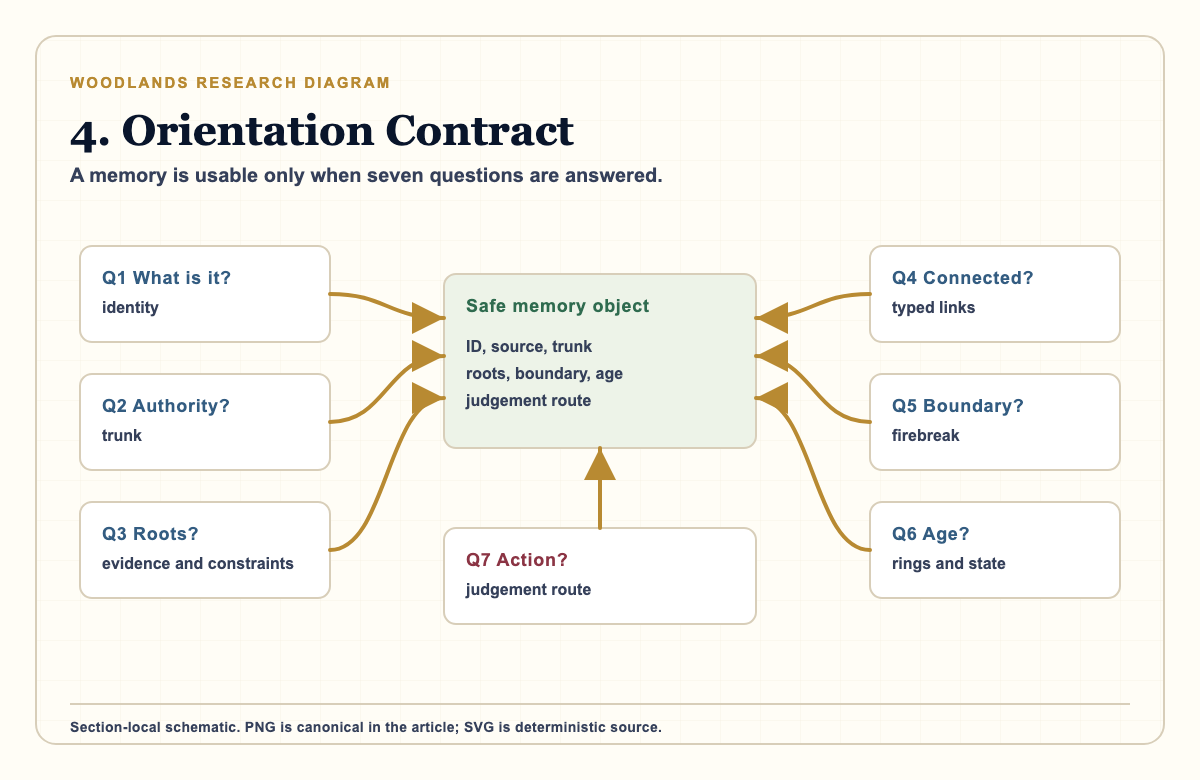
Section 4 diagram: a memory object becomes usable only when identity, authority, roots, links, boundaries, lifecycle state, and action route are explicit.
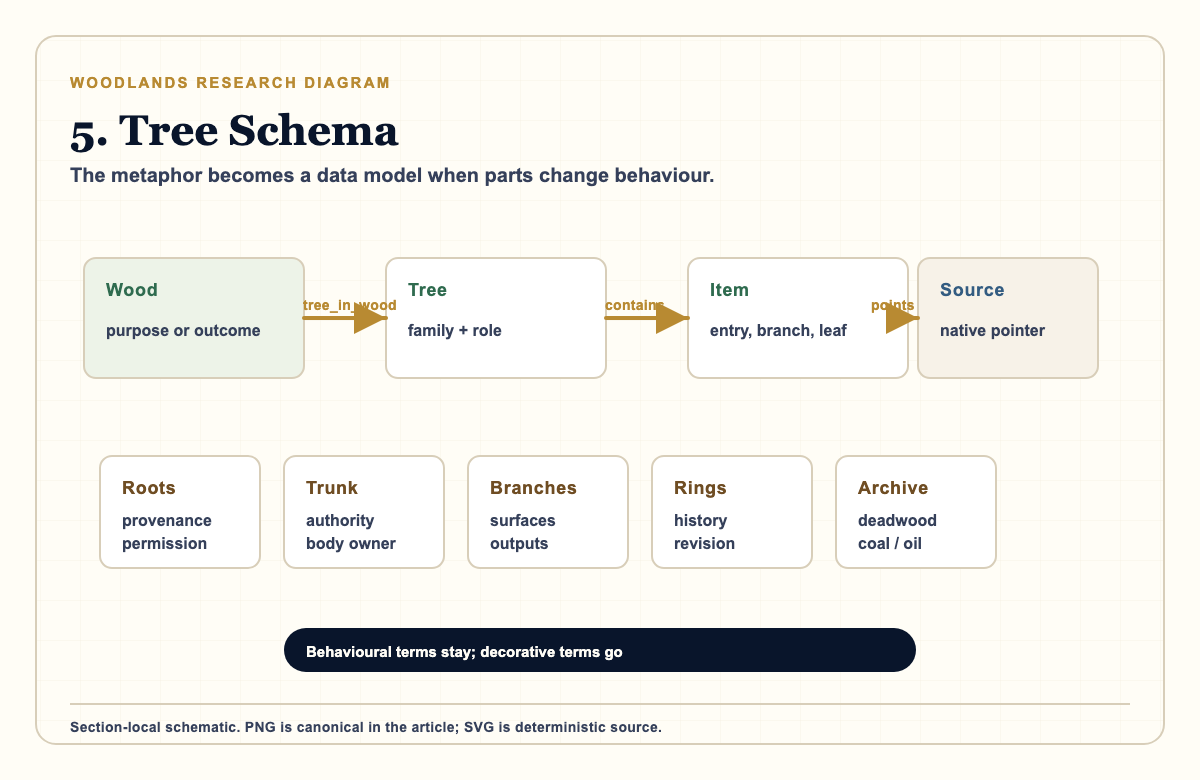
Section 5 diagram: the tree language becomes useful only where it changes routing, retrieval, provenance, boundary, ageing, or action.
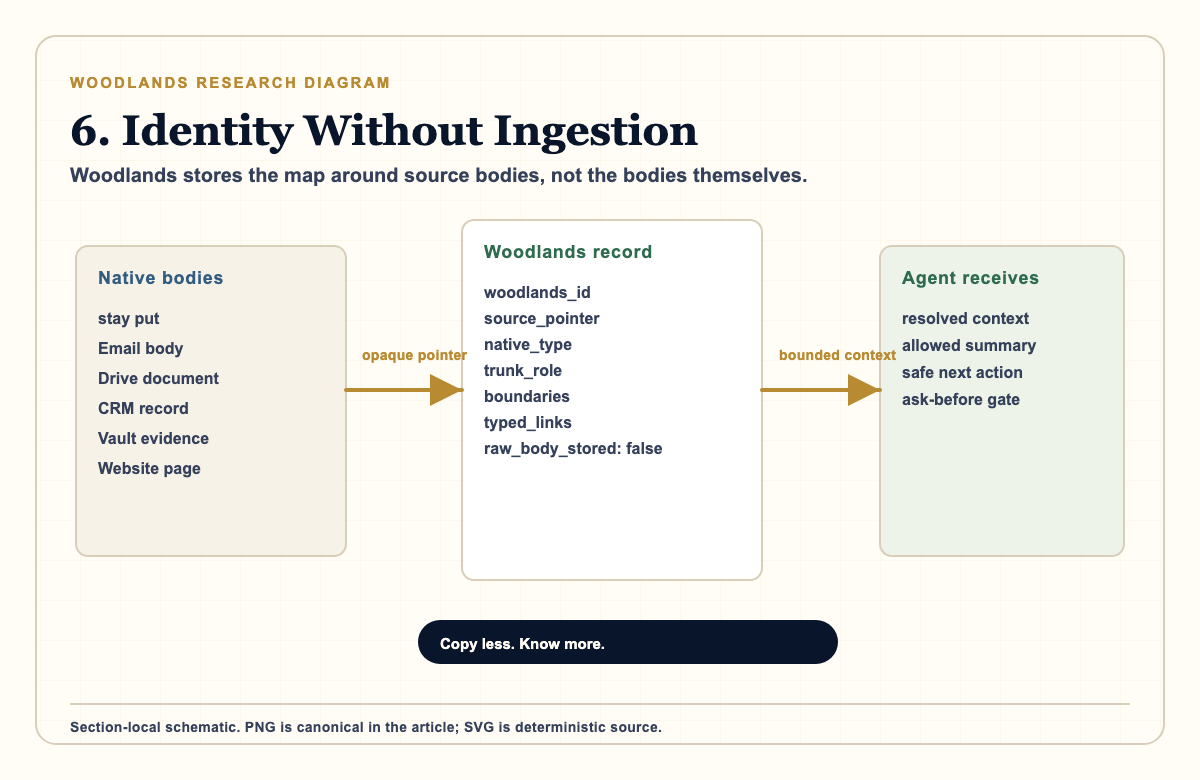
Section 6 diagram: Woodlands reduces risk by storing identity and meaning around source bodies rather than copying every body into a new universal store.
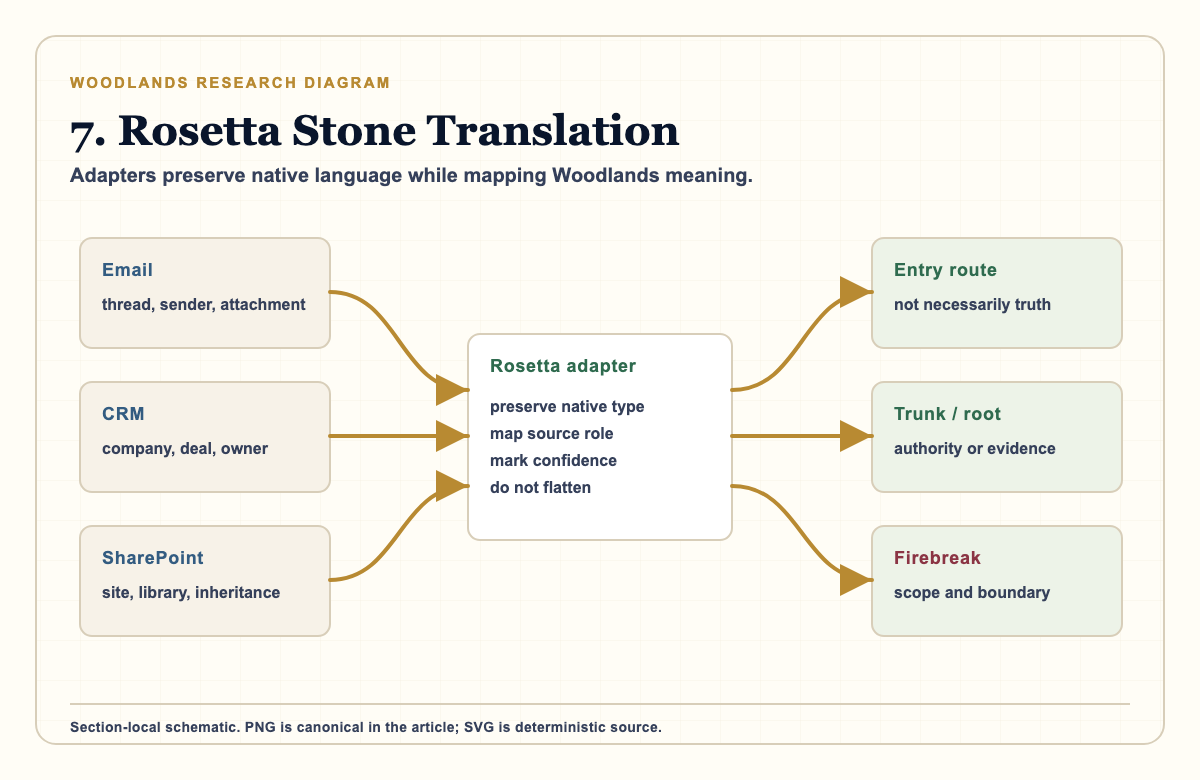
Section 7 diagram: Rosetta translation preserves native source meaning while mapping each object to a Woodlands role. It is the antidote to flattening.
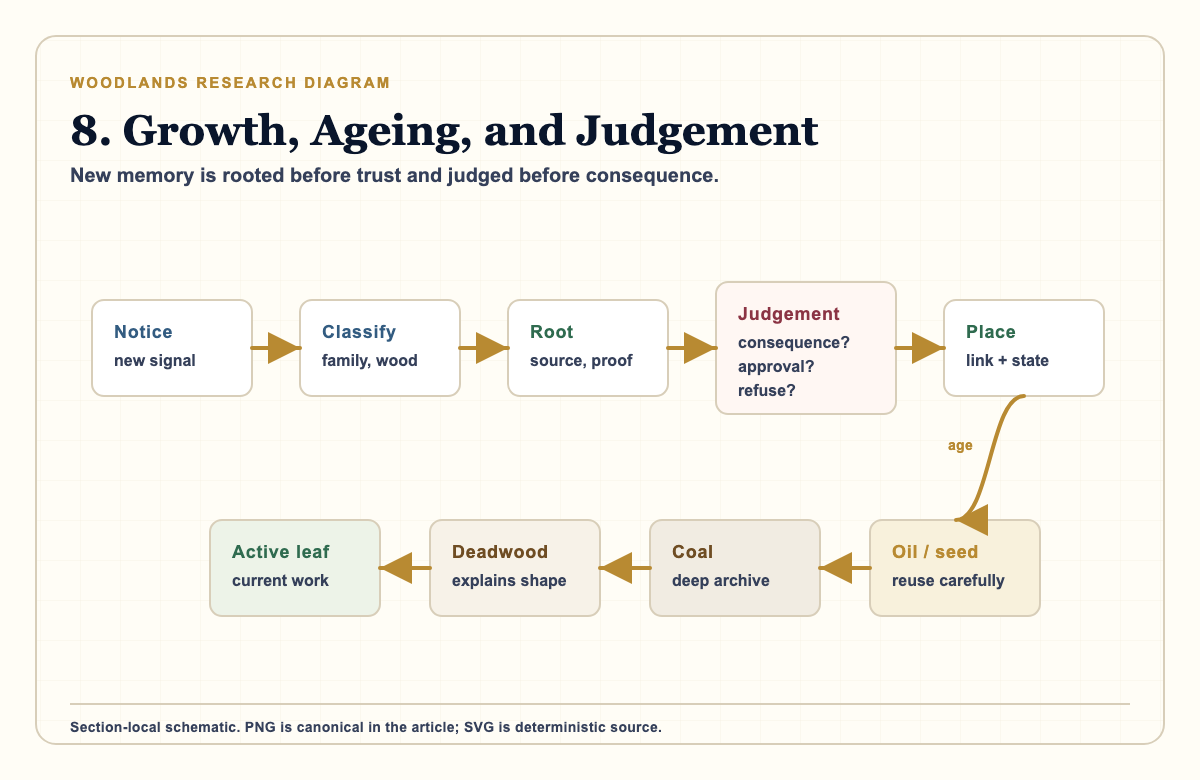
Section 8 diagram: new memory is rooted before it is trusted, judged before it creates consequence, and aged into the right state when its role changes.
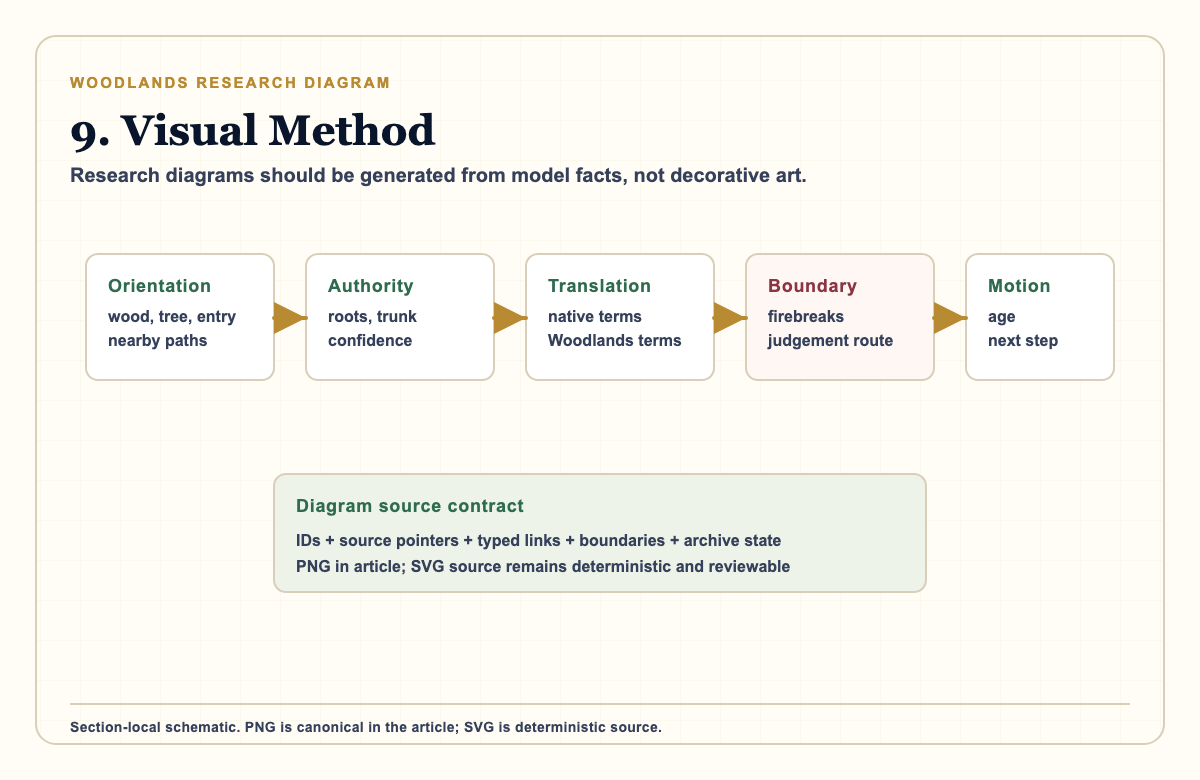
Section 9 diagram: research diagrams should be generated from model facts such as IDs, source pointers, typed links, boundaries, and archive state.
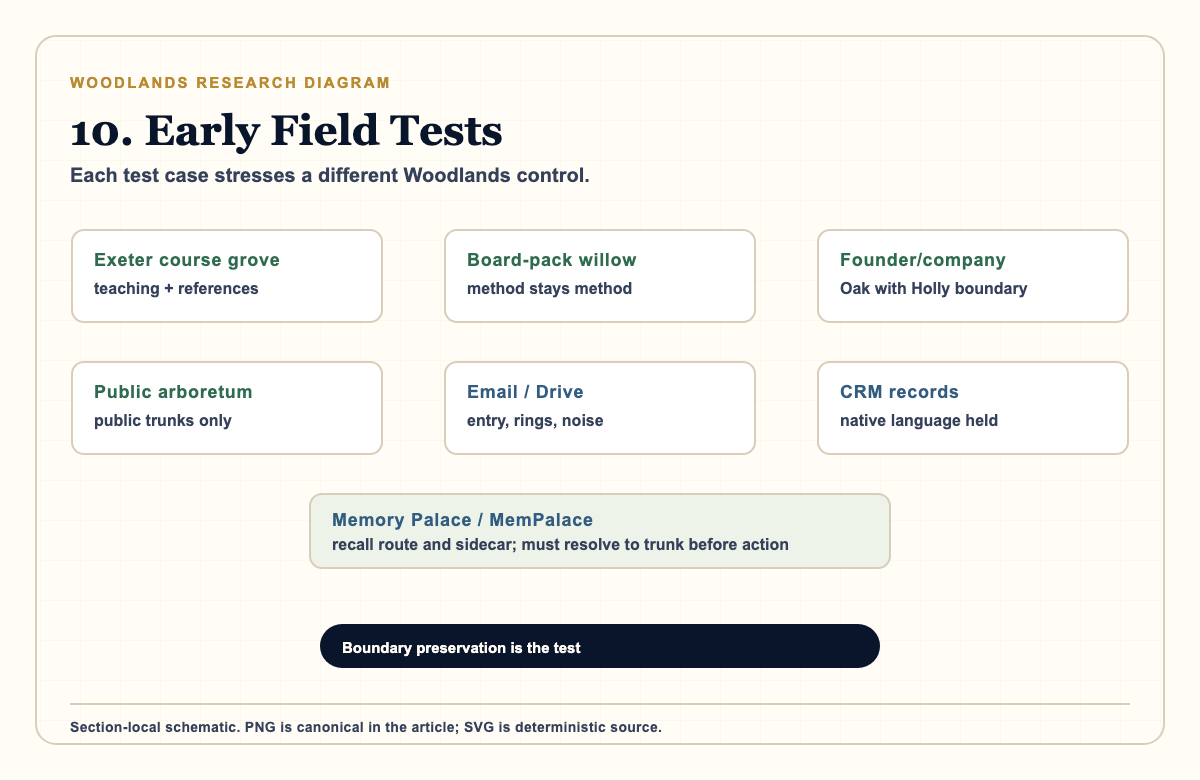
Section 10 diagram: the field tests are not simply examples. Each case stresses a different control: boundary preservation, source authority, native language, or version noise.
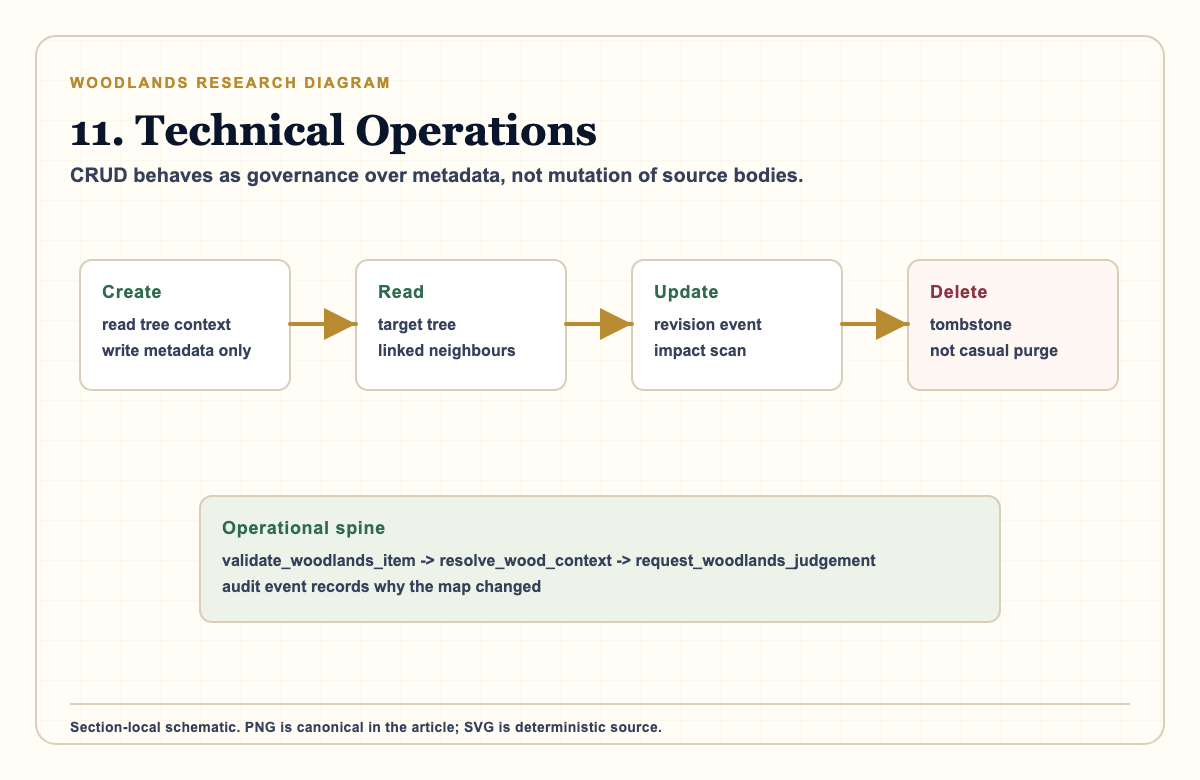
Section 11 diagram: CRUD is treated as governance over the Woodlands map. Delete creates a tombstone rather than pretending history never happened.
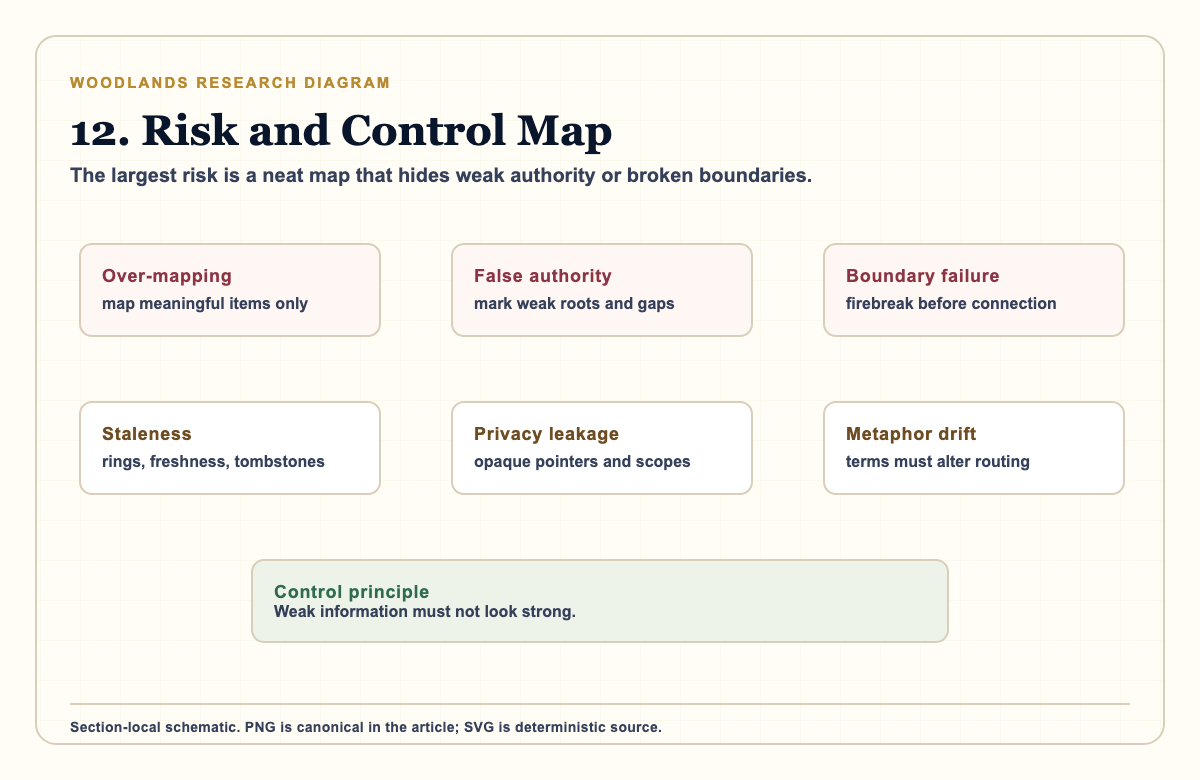
Section 12 diagram: the control test is whether the map makes weak information look strong. If it does, the map is unsafe no matter how neat it appears.
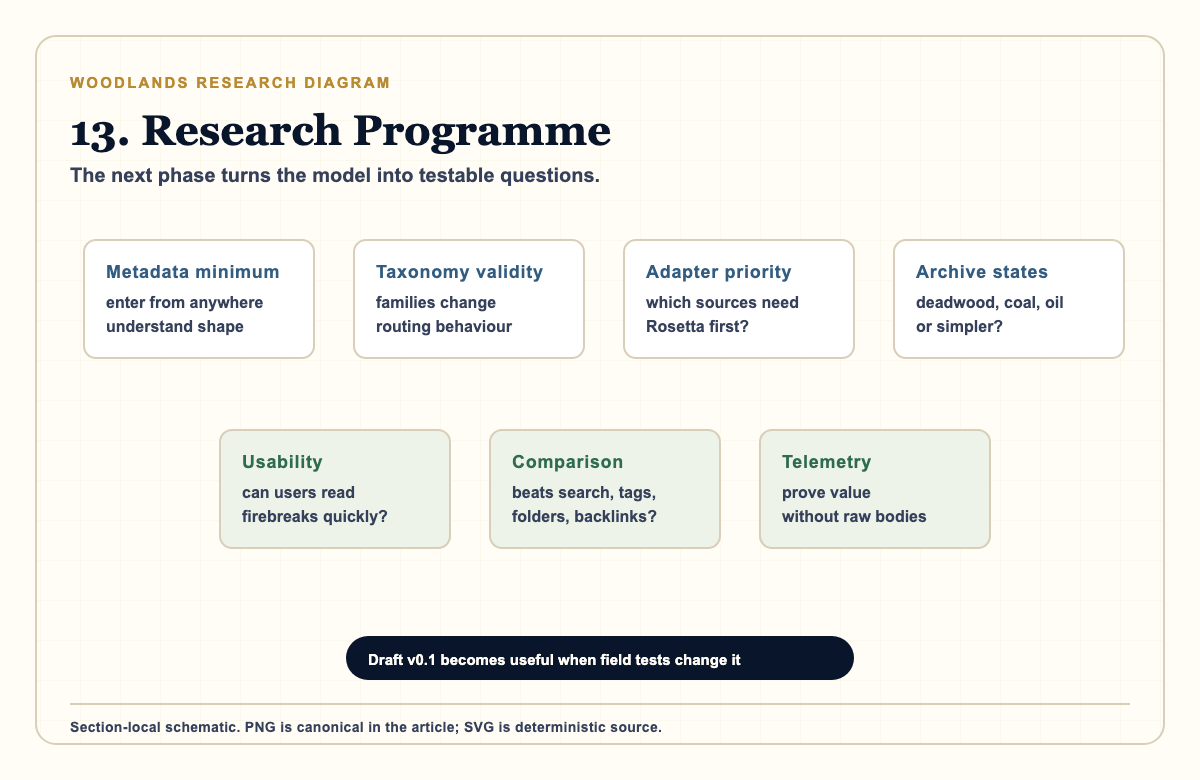
Section 13 diagram: draft v0.2 becomes useful when the research questions are turned into field tests that can change the model.
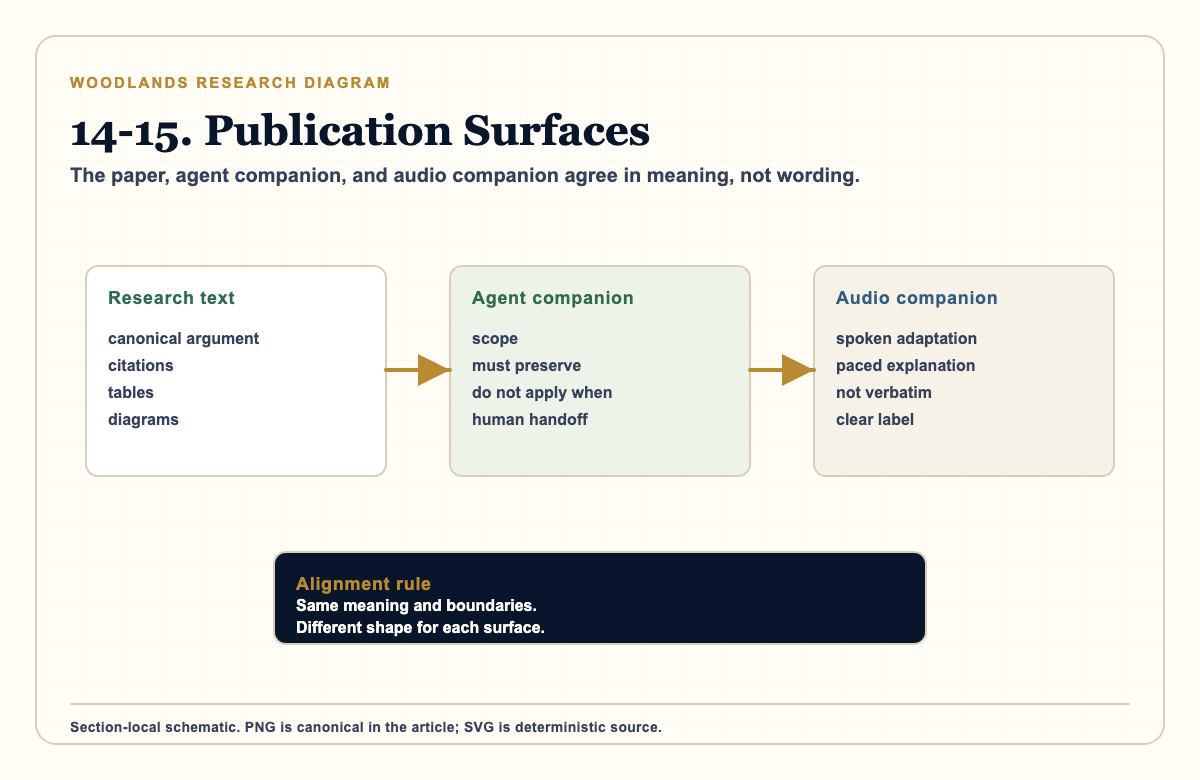
Sections 14 and 15 diagram: the text, agent companion, and audio companion should preserve the same meaning and boundaries while taking the shape their audience needs.