Agentic Language: The Common Language Layer For Agentic Work
Article by Tony Wood | Original article on Tonywood.org
Images load from the public site. Original files are unchanged. This sheet is not a new licence; existing rights apply.
Original captions and credits
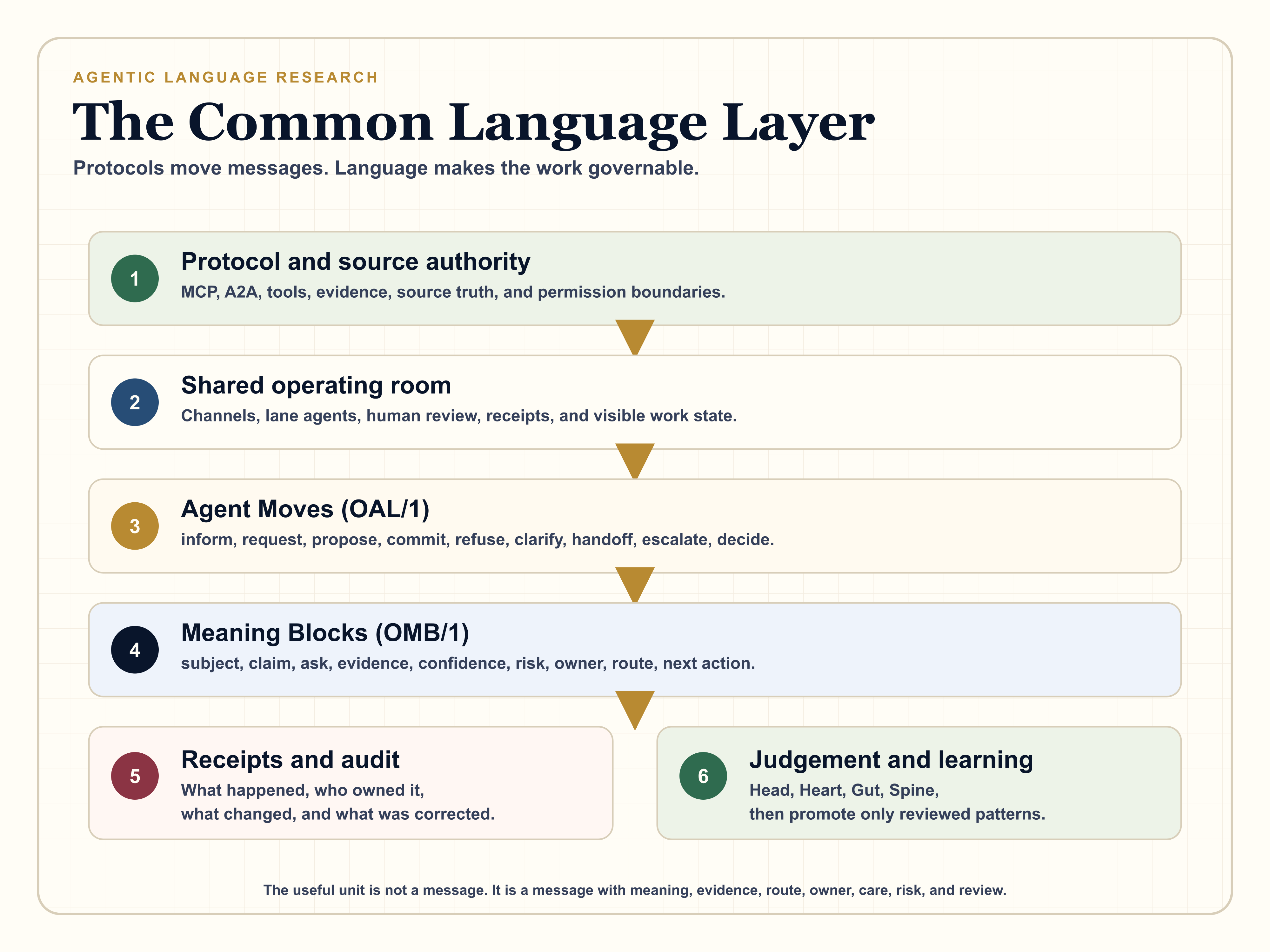
The common language layer sits between human intention and agentic execution. It lets an agent say what move it is making, what the work means, what evidence supports it, what boundary applies, and what should happen next.
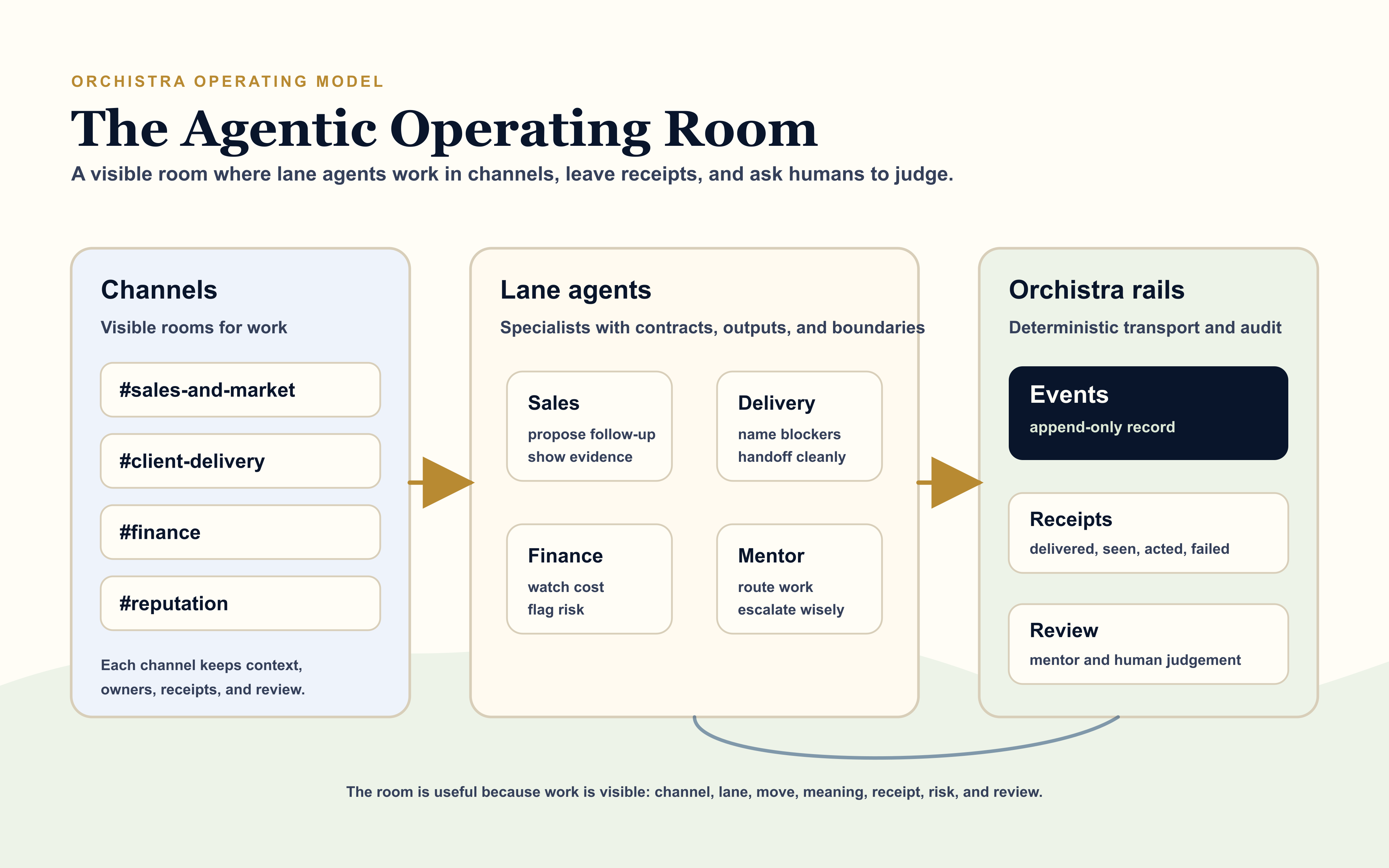
Orchistra is a visible operating room, not a hidden swarm. Channels, lane agents, receipts, events, and human review make the work inspectable before it becomes automated.
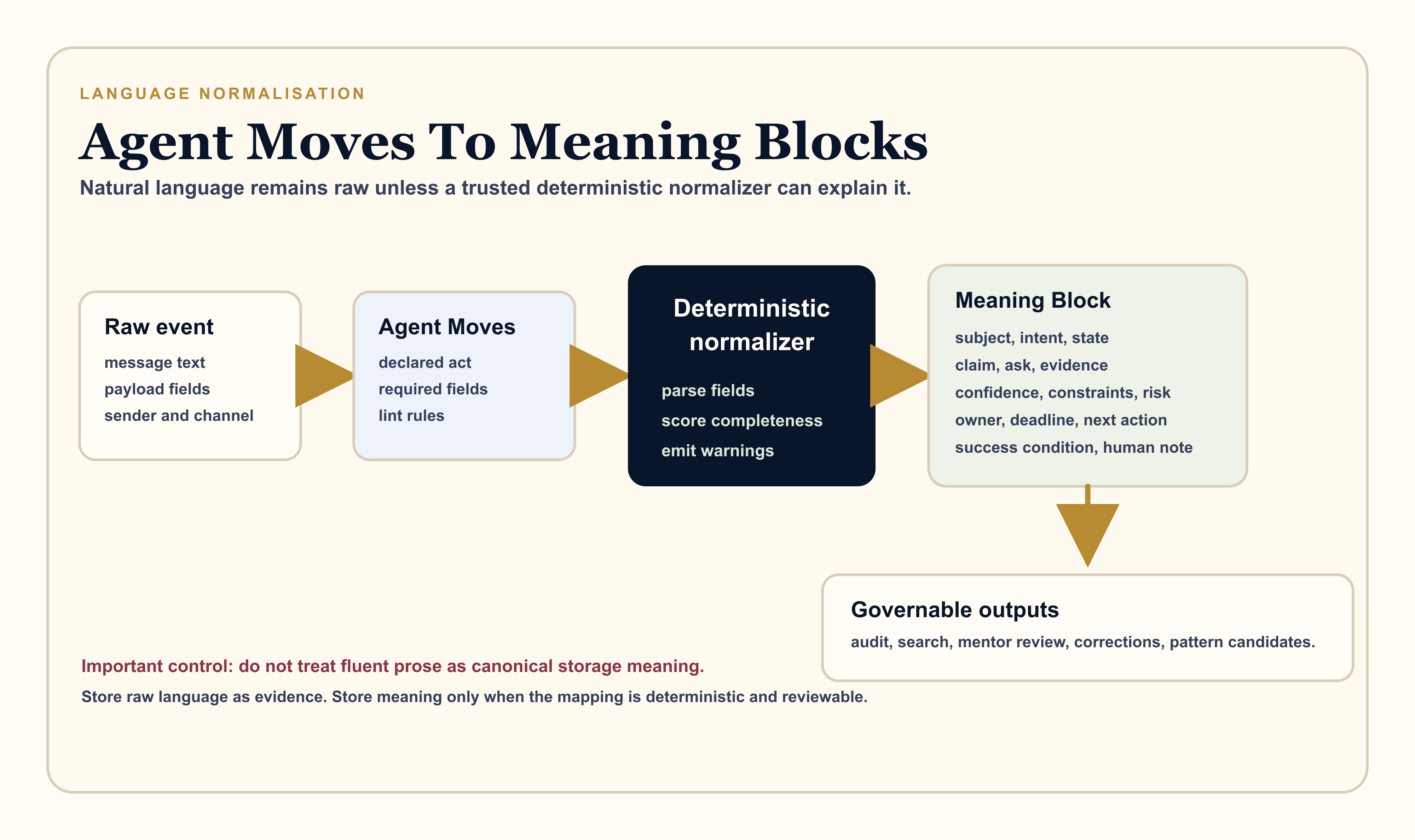
Agent Moves are the communication language. Meaning Blocks are canonical storage meaning. The separation lets raw events remain intact while adding machine-readable meaning when it can be normalized safely.
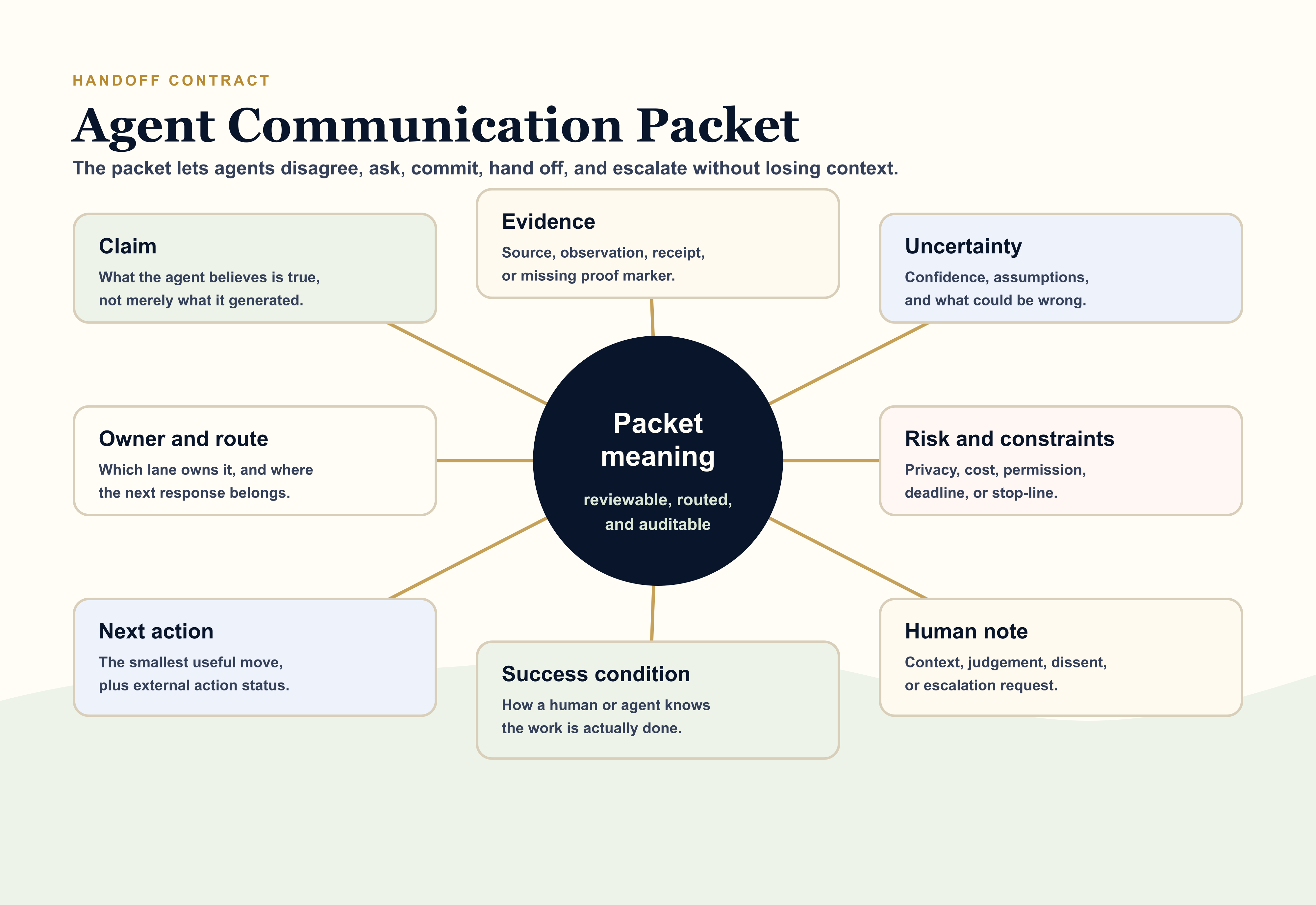
A useful agent packet does not merely say "I think this". It carries the evidence, uncertainty, owner, route, risk, success condition, and whether external action is allowed.
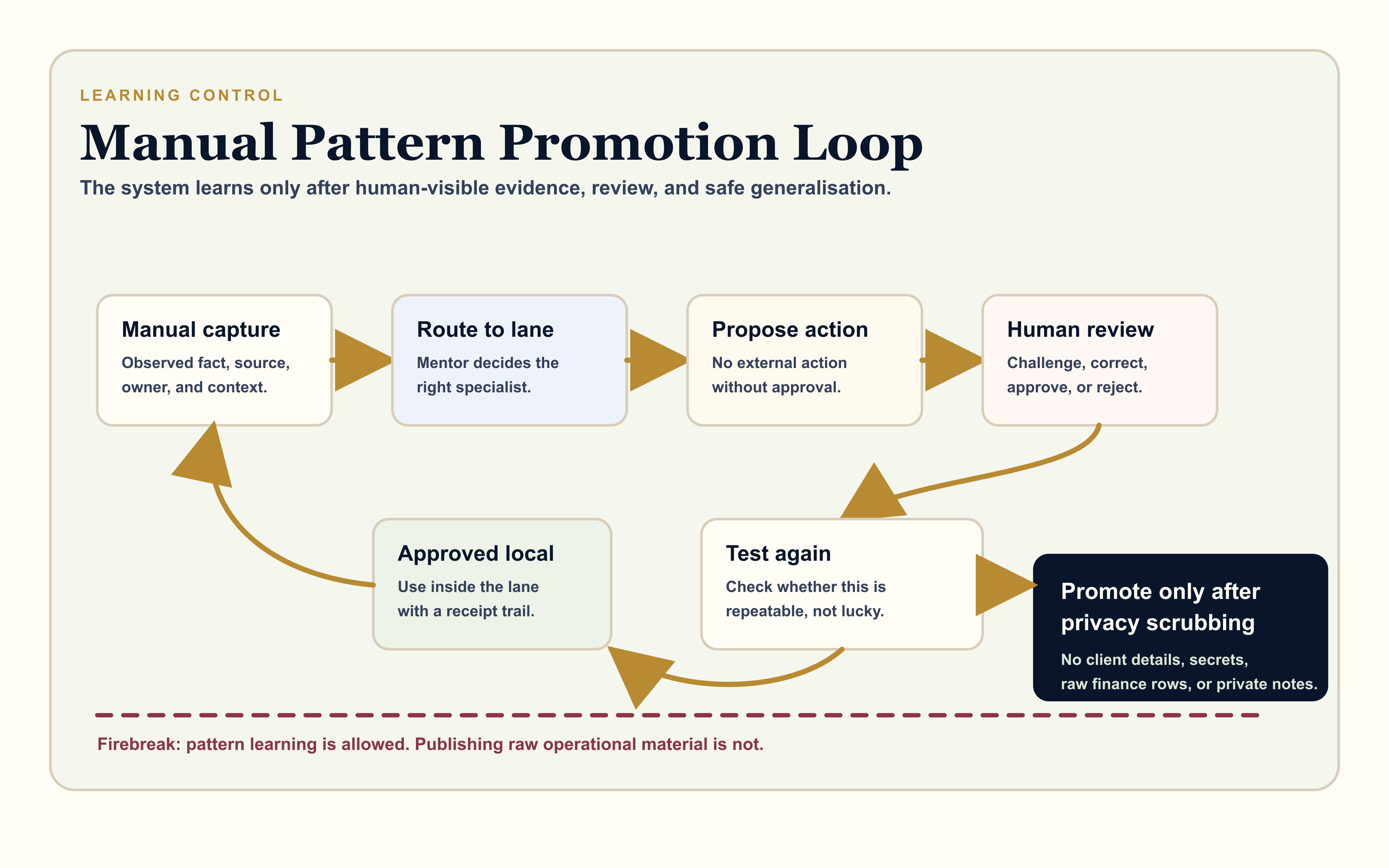
The promotion loop keeps learning close to the work. It also stops private context, client detail, finance data, and local commercial assumptions from leaking into shared runtime patterns.